
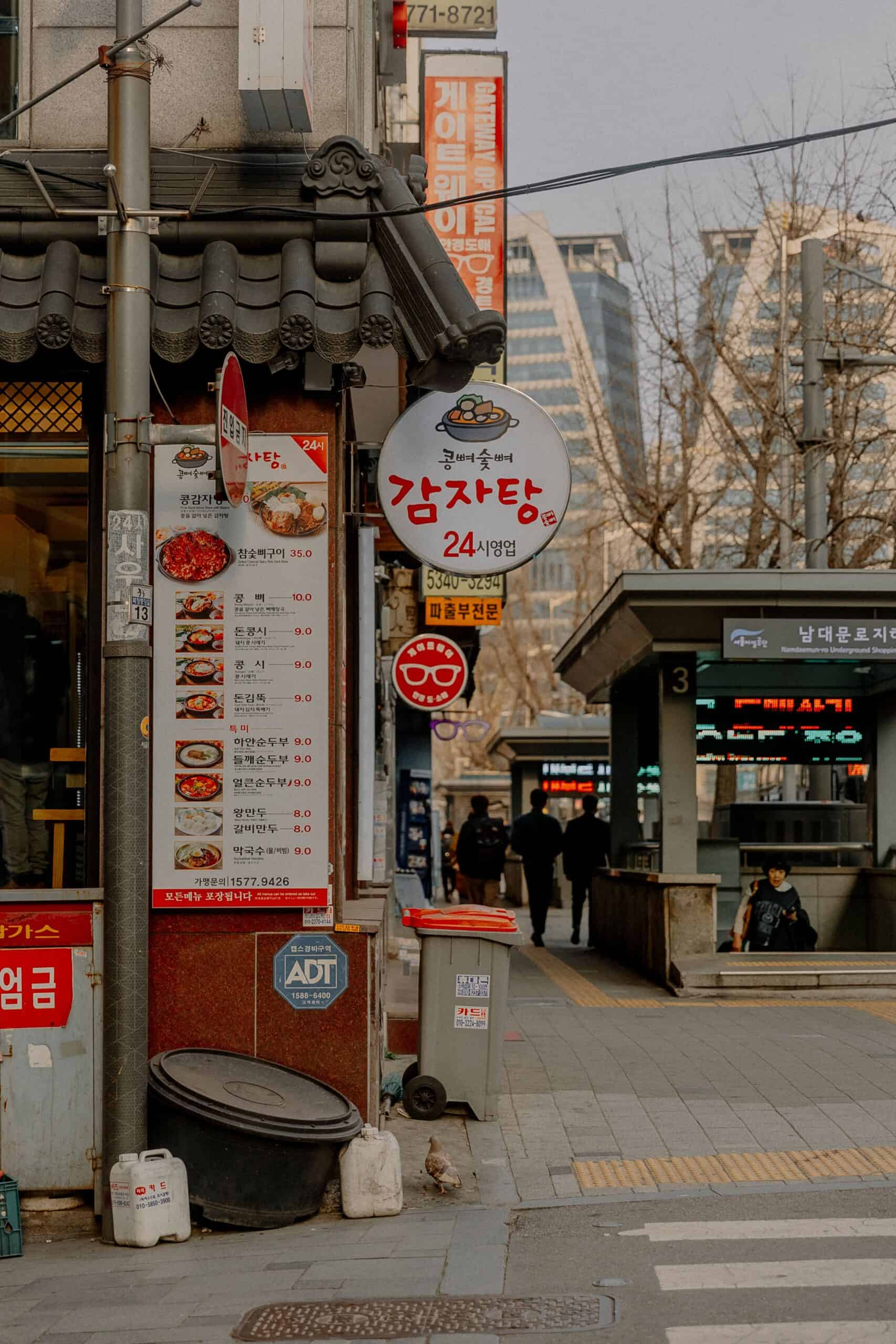
Most Korean menus aren't actually trying to confuse foreign visitors — they're just written for people who already know the shorthand. Once you recognize a handful of recurring words and endings, a wall of Hangul stops looking random and starts looking like a pattern you can work with, even with zero Korean.
Once you can read the menu, it helps to know what you're actually looking at historically. Our breakdown of royal court cuisine covers the dishes that originated in the palace kitchen and where to still find them today.
This isn't a substitute for actually learning the language, and it won't help with every regional specialty. But paired with our primer on Korean food for visitors, it should get you through the vast majority of ordinary restaurant menus without having to gamble on a random dish.
Jump to:
🍢 Cooking Method Words Do a Lot of the Work
A huge number of dish names are just [ingredient] + [cooking method], which means learning the cooking method words is disproportionately useful. 구이 (gui) means grilled, 찜 (jjim) means steamed, 볶음 (bokkeum) means stir-fried, and 조림 (jorim) means braised in sauce. Once those register, "somethinggui" or "somethingbokkeum" tells you exactly how the dish arrives, even if you don't recognize the ingredient in front of it.
This is also how a dish like bibimbap gets its name — 비빔 (bibim) roughly means "mixed," and 밥 (bap) means rice. Our guide to bibimbap breaks down exactly what "mixed" means in practice if you want the full picture.
🍲 Soup, Stew, and Hot Pot Aren't the Same Word
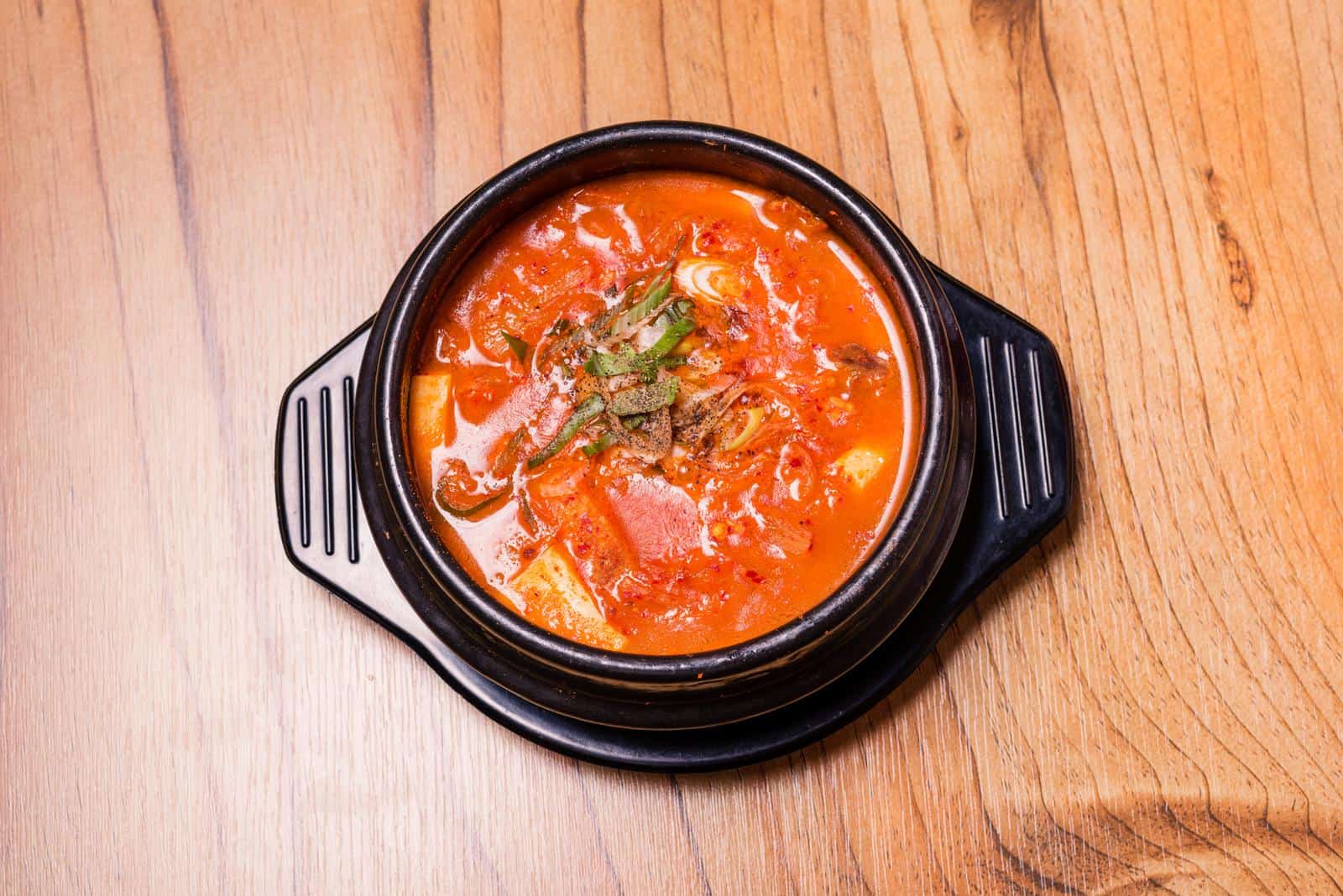
Korean menus draw a real distinction between three categories that might all look like "soup" in English. 국 (guk) is a lighter, brothier soup. 찌개 (jjigae) is a thicker, more concentrated stew, usually served bubbling and meant to be shared. 탕 (tang) sits somewhere in between and often implies a heartier, longer-simmered broth. Getting these three confused is one of the more common ordering mistakes visitors make, since a jjigae and a guk can arrive looking fairly different from what you pictured.
🥢 Reading the Set Meal and Portion Words
세트 (set) means combo or set meal, usually a fixed group of items at a fixed price, similar to a "meal deal." 정식 (jeongsik) signals a more traditional full-course set meal, often with several small side dishes included automatically. 인분 (inbun) is a portion counter, so a menu listing "2인분" means the dish is priced or served per two portions, which matters a lot for anything meant to be grilled or shared at the table.
Speaking of shared dishes: almost none of the small side dishes that show up automatically are separately ordered or charged. Our guide to banchan and Korean side dishes explains what to expect there, since it surprises a lot of first-time visitors.
📱 When All Else Fails: Apps and Pointing
For anything that doesn't fit a pattern, camera-based translation apps handle Korean menus reasonably well, especially for printed text rather than handwritten specials boards. Korea's own tourism resources point travelers toward multilingual ordering apps for exactly this reason, particularly at delivery-only spots where there's no menu board to point at.
And when the app fails too, pointing at a photo, a plastic food display, or another table's order is a completely normal way to order in Korea. Nobody will think it's strange.
🌱 Ordering Around Allergies or Dietary Restrictions
Dietary restrictions are harder to communicate through pointing alone, so this is the one area worth preparing a phrase for in advance. Korea's official tourism guidance specifically recommends preparing phrases like "I am a vegetarian" or "I cannot eat meat, eggs, and dairy" ahead of time, since staff can't always tell from a menu alone which dishes are safe.
It's also worth knowing that a lot of dishes that look plant-based, various banchan especially, are still made with fish sauce or anchovy stock, which isn't always obvious from the name. If you're building out a broader food bucket list for the trip anyway, our list of 50 Korean foods every foodie should try flags which dishes tend to be vegetarian-friendly and which don't.
One more thing worth knowing before you sit down: how you address restaurant staff matters more in Korea than it does in a lot of other countries. Our guide to Korean honorifics and how to address people covers the polite way to get a server's attention, which pairs naturally with everything else here.
❓ Frequently Asked Questions
Use a camera-translation app for printed menus, and don't hesitate to point at a photo, plastic food display, or another table's dish. Pointing is a completely normal way to order in Korea.
It's a portion counter. A dish listed with '2인분' means it's priced or served per two portions, which is common for grilled meats and dishes meant to be shared.
There's no single universal marker, but menus with photos usually show red, sauce-heavy dishes clearly. Camera translation apps can also flag words like 매운 (spicy) in the dish name.
They're included automatically at almost every sit-down Korean restaurant and aren't charged separately. You generally don't need to request or order them.



Comments
No Comments