
A Joseon king didn't just eat well — his meals were treated as a matter of state. Ingredients were sourced from specific regions as tribute, cooking was handled by trained specialists, and the entire table setting followed rules refined over roughly 500 years of dynasty.
Some of that food has quietly survived into the present, sometimes in a fancier restaurant version and sometimes barely changed at all. If you want the everyday version of Korean eating first, our primer on Korean food for visitors is a good place to start. This one is specifically about what happened at the top of the food chain, literally.
Jump to:
👑 The Surasang: A King's Daily Table
A king's meal was called surasang, served roughly twice a day — a morning sura around 10am and an evening sura between 6 and 7pm. A basic royal table included 12 separate elements: rice, soup, jjigae (stew), jeongol (hot pot), kimchi, various pastes, and a rotating set of side dishes built around whatever was in season.
That number wasn't arbitrary. It was meant to demonstrate the full range of what the kingdom could produce at any given time of year, which is part of why royal cuisine leaned so heavily on regional tribute ingredients rather than whatever was simply convenient.
🍲 Notable Royal Dishes You Can Still Order
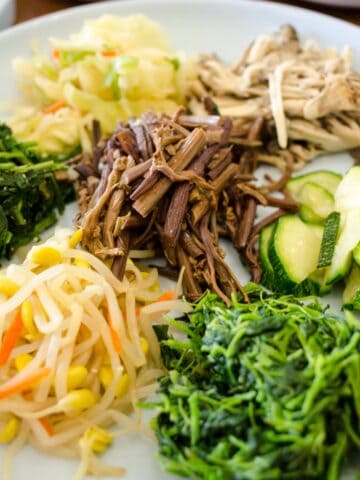
A few dishes from the royal table are still findable today, sometimes at dedicated traditional restaurants and sometimes in adapted, everyday form. Gujeolpan is one of the more recognizable: a platter divided into nine sections, eight filled with different meats and vegetables, wrapped in a thin wheat crepe from the center.
Sinseollo, a royal hot pot cooked in a pot with a hollow center for charcoal, is another. And some royal dishes eventually made their way into everyday Korean cooking entirely — japchae and bulgogi both have court-cooking roots, even though neither one feels the least bit formal on a table today.
👩🍳 Who Actually Cooked for the King
Royal kitchens ran on two separate tracks of trained staff: court ladies known as jubang sanggung, and professional male chefs called suksu. Both went through years of strict training before they were allowed anywhere near a king's table, and cooking knowledge was typically passed down within these roles across generations.
When the Japanese occupation began in 1910 and the royal palace kitchens were dismantled, many suksu lost their positions and moved into restaurants outside the palace walls. That, somewhat accidentally, is how royal recipes ended up reaching the general public at all.
📜 How Royal Cuisine Survived the End of the Monarchy
Royal cuisine could easily have disappeared entirely once the Joseon dynasty ended in 1910. Instead, in 1971, the Royal Culinary Art of the Joseon Dynasty was formally designated a Korean Important Intangible Cultural Property, which gave it official protected status and funding for preservation, similar to how a historic building might be protected.
That designation is the reason detailed royal recipes still exist today at all, rather than surviving only as vague descriptions in old court records.
🏯 Where to Try It in Seoul Today
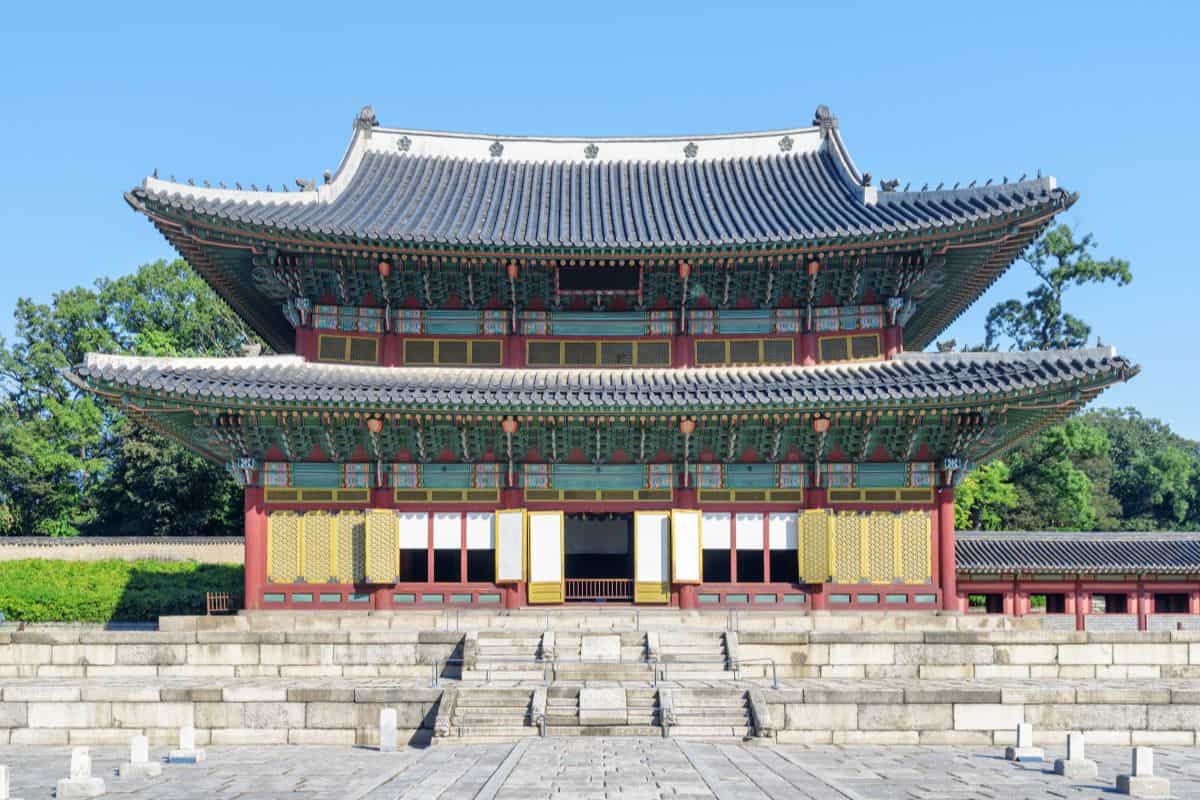
The clearest starting point is the Institute of Korean Royal Cuisine, located near Changdeokgung Palace in Jongno-gu, which was established specifically to research, preserve, and teach these recipes and still offers tastings and classes today. Pairing a visit with one of Seoul's five grand palaces makes for a fairly natural day, since most of these dishes were, quite literally, born a few hundred meters from where the kings who ate them actually lived.
Beyond that, a handful of traditional restaurants around the city serve royal-style tasting courses, usually built around the same 12-dish table logic and worth pairing with a broader look at Korean banchan and side dishes to see how much of that structure carried over into everyday Korean meals.
❓ Frequently Asked Questions
A basic royal table (surasang) included 12 elements: rice, soup, stew, hot pot, kimchi, pastes, and a rotating set of seasonal side dishes. Special feasts could include far more.
It's related but more elaborate. Royal cuisine used the same core ingredients as everyday Korean cooking, but with more refined preparation, formal plating, and tribute ingredients sourced from specific regions.
Yes. The Institute of Korean Royal Cuisine near Changdeokgung Palace offers tastings and classes, and several traditional restaurants around Seoul serve royal-style tasting courses.
Yes, several. Japchae and bulgogi both have documented ties to royal court cooking, even though they're now common, everyday dishes rather than anything formal.
Comments
No Comments