
Drinking in Korea isn't just about what's in the glass. There's a whole layer of etiquette running underneath it — who pours for whom, who can drink first, and who's quietly expected to keep an eye on everyone else's glass all night.
None of it is written down anywhere you'll actually see as a visitor, which is exactly why so many people get caught off guard by it. If you're one drink in and already regretting it, our hangover cure playbook covers that side of the night. This one is about getting through the actual drinking part gracefully.
Jump to:
🍶 What to Order

Soju is still the default. It's cheap, it's everywhere, and ordering it is rarely a wrong move. If you want the full picture of what it actually is and how it's made, our guide to soju is a good starting point — or see Wikipedia's overview of soju for its history and how it's traditionally distilled.
Beyond soju, beer, makgeolli (rice wine), and somaek (a soju-beer mix) round out most tables. Our breakdown of soju vs. makgeolli and our guide to somaek both cover when each one actually makes sense to order. If you want to branch out further, our list of Korean drinks that aren't soju has more options.
🤲 How to Pour (and Receive)
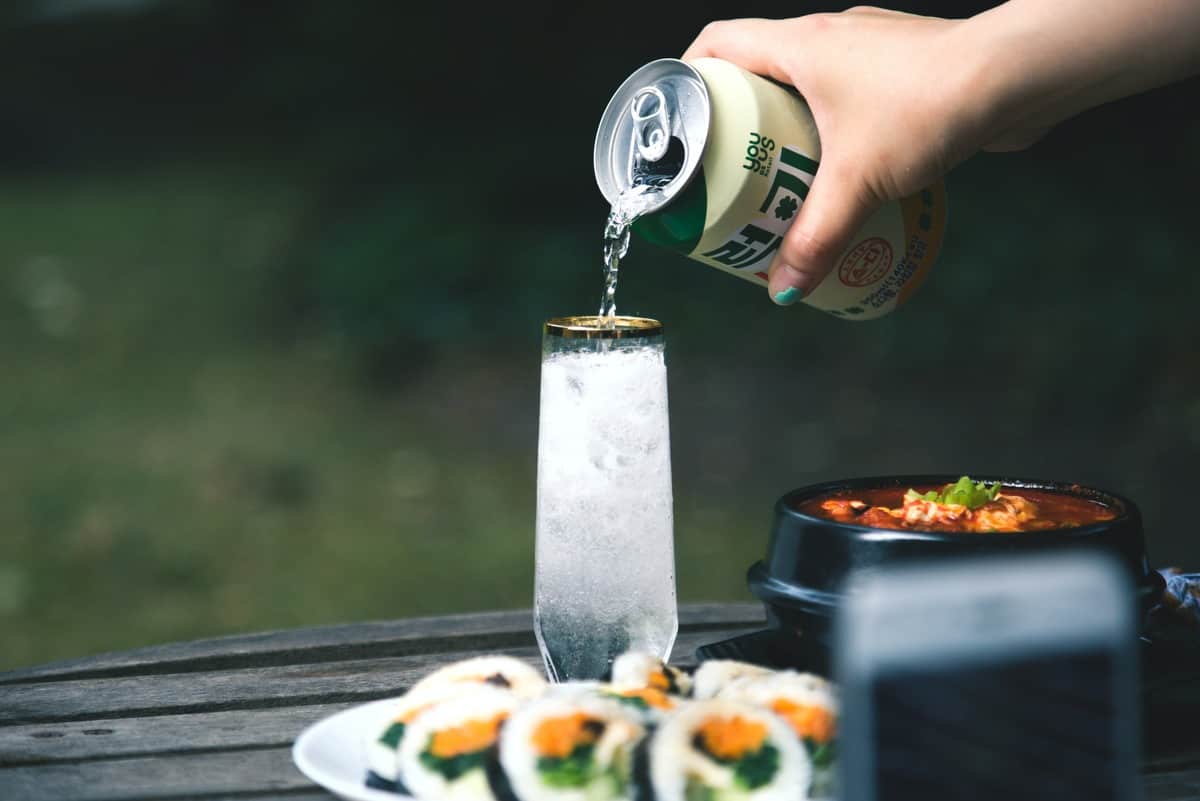
This is the rule most visitors get wrong first. You never pour your own drink in Korea — someone else pours for you, and you return the favor for them. When you're pouring for or receiving a drink from someone older or more senior, use two hands, or at minimum keep your free hand resting near your elbow as a gesture of respect.
Pouring with one hand toward a peer your own age is generally fine and common. It's specifically the age or status gap that triggers the two-handed version.
🙈 Why You Turn Away From Elders
One of the more surprising customs for visitors: when someone senior hands you a drink, it's polite to turn your head slightly away from them before you actually drink it. It's a small gesture, but skipping it in a formal setting can read as careless even if you got everything else right.
Reporting on how younger Koreans are reshaping these norms notes that Gen Z is relaxing plenty of older drinking customs, but the two-hands-and-turn-away combination is still one of the more persistent ones, especially with actual bosses or grandparents at the table.
👀 Why the Youngest Person Pays Attention
If you're the youngest or most junior person at a Korean table, you have a job: keep track of everyone's glass. When someone's drink runs low, you top it off before they have to ask. You're often also the one who opens the first bottle and pours the first round, especially in a work setting.
It's not about being subservient so much as it's a small, constant signal of respect. Visitors who make an effort to notice and refill glasses, even imperfectly, tend to get a lot of goodwill for it.
🥴 What Happens If You Don't Want to Drink
Turning down alcohol entirely is becoming much more normal, especially with younger Koreans, but it still helps to have a reason ready in more traditional or work-related settings: driving, medication, or simply not drinking are all accepted, though a flat "no thanks" with no explanation can occasionally land oddly with older company. Letting your glass stay full rather than announcing you're not drinking is usually the smoothest way to opt out without much friction.
❓ Frequently Asked Questions
For anyone older or more senior than you, yes. Pouring or receiving with two hands (or one hand supported at the elbow) is the safest default. Between peers your own age, one hand is fine.
It's not exactly rude, but it's unusual and can come across as a little awkward in a group setting. The norm is that someone else pours for you, and you do the same for them.
It refers to keeping an eye on everyone's glasses and topping them off before they run dry, not to who picks up the bill. It's a small, ongoing courtesy rather than a financial obligation.
Yes, and it's increasingly common, especially among younger Koreans. Leaving your glass full is usually enough of a signal, though having a light reason ready (driving, medication) can smooth things over in more traditional settings.
Comments
No Comments