
One of the easiest mistakes to make with Korean food is thinking it is basically the same everywhere.
It's not.
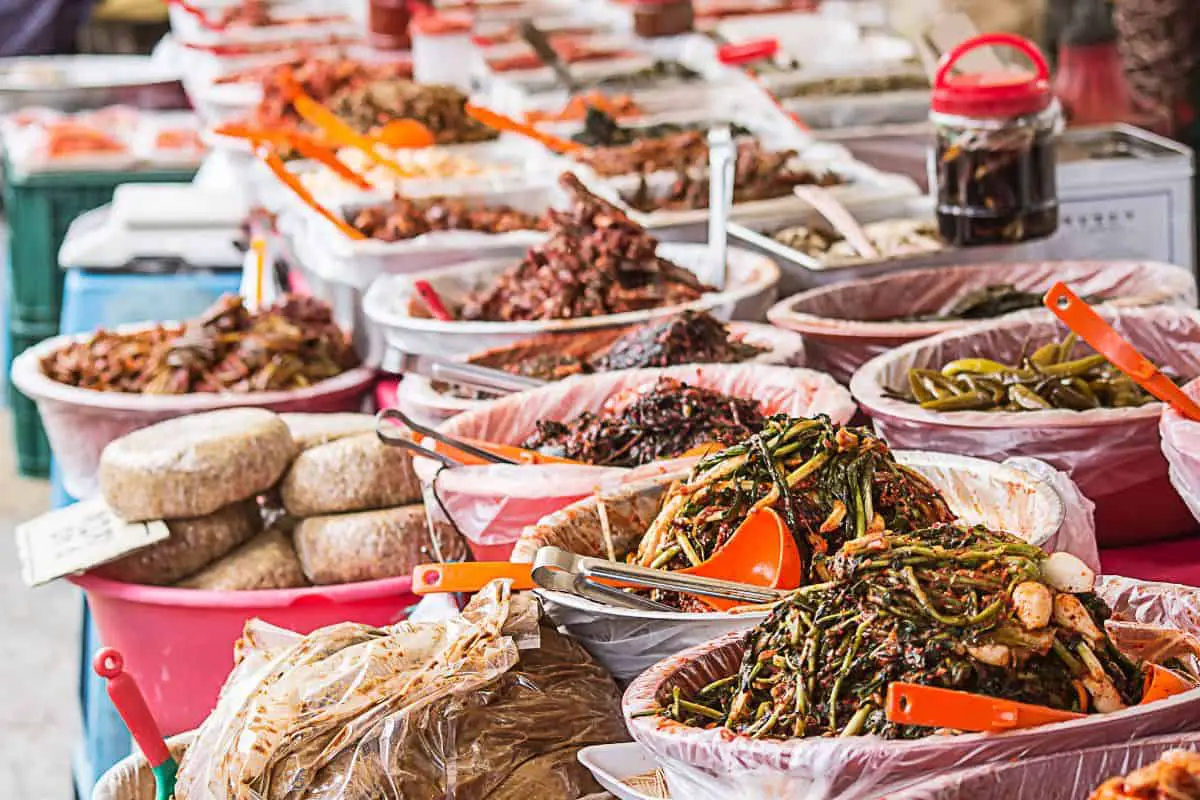
Yes, you can find bibimbap, kimchi jjigae, and Korean BBQ in a lot of cities. But once you start paying attention by region, Korea opens up in a completely different way. The food shifts with the coast, the mountains, local farming, old trade routes, weather, and what people historically had easy access to. That is why one city feels all about seafood and soups, while another leans into buckwheat, pork, or deeply rooted ceremonial dishes.
So if you want a better way to explore Korean food, this is a good place to start: seven regional stops, seven different moods, and a much wider sense of what Korean cuisine actually is.
Jump to:
- 🗺️ Why Korean Food Changes More Than People Expect by Region
- 📍 Stop 1: Seoul — The All-Rounder City of Classics and Trends
- 🌊 Stop 2: Busan — Seafood, Pork Soup, and Market Energy
- 🍚 Stop 3: Jeonju — The Region That Made Bibimbap a Legend
- 🍗 Stop 4: Andong — Hearty Dishes and Historic Comfort Food
- 🐖 Stop 5: Jeju — Black Pork, Seafood, and Island Flavors
- 🌶️ Stop 6: Daegu — Bold Flavors and Punchier Comfort Foods
- 🦀 Stop 7: Gangwon — Buckwheat, Potatoes, and Mountain Logic
- 🍽️ How to Use This 7-Stop Food Map on a Real Trip
- 💡 What This Food Map Says About Korean Cuisine as a Whole
- ❓ Frequently Asked Questions
- 💬 Comments
🗺️ Why Korean Food Changes More Than People Expect by Region
Korean food is often talked about like one big national menu, but regional food culture runs deep.
A coastal city will naturally lean harder into seafood, fish cakes, and salty, brothy flavors. Mountain areas tend to give you more wild greens, potatoes, buckwheat, and hearty foods that make sense in colder weather. Historic cities often hold onto old-style recipes, ceremonial dishes, or more traditional table culture. Island food has its own logic too, especially when local pork, fish, and specific crops shape what people eat every day.
That is what makes eating by region so fun. You stop asking, “What is Korean food?” and start asking, “What kind of Korean food belongs here?”
📍 Stop 1: Seoul — The All-Rounder City of Classics and Trends
Seoul is the easiest place to start because it gives you a little bit of everything.
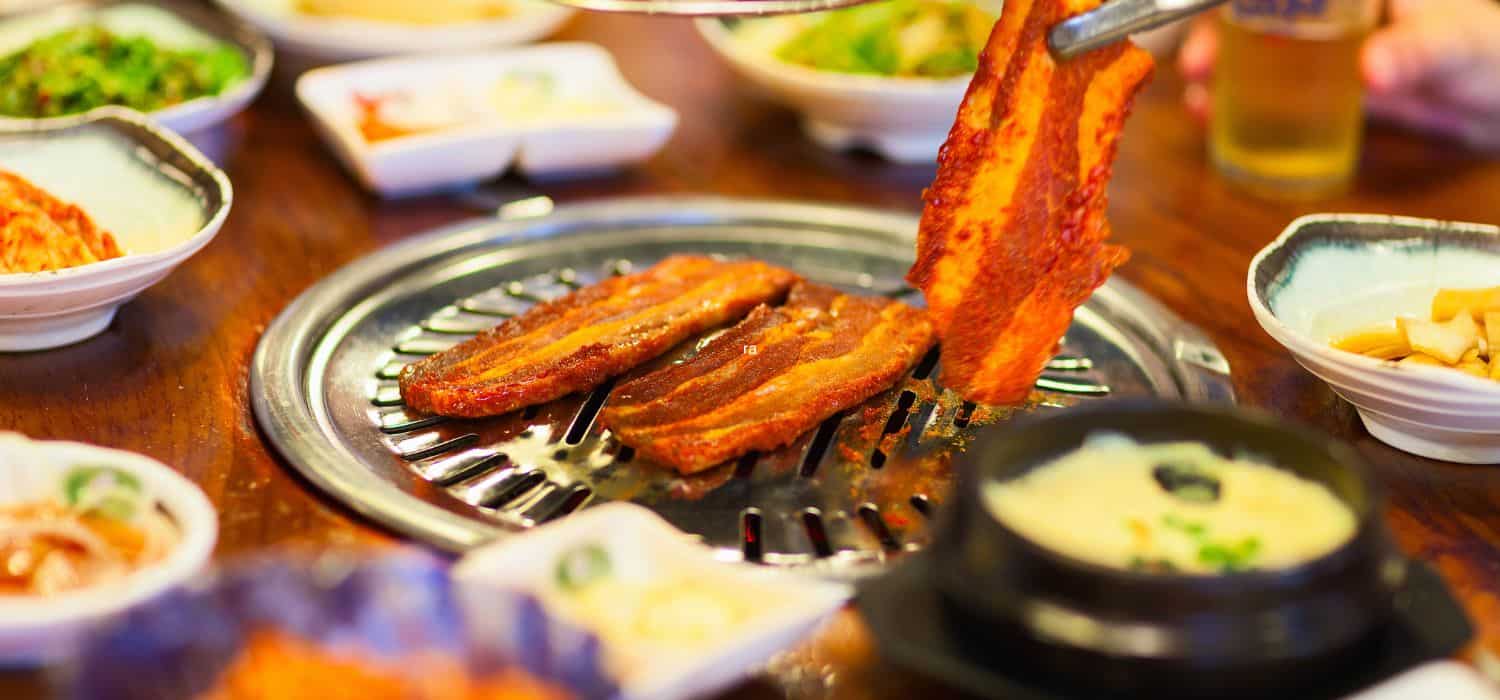
It is not always the most “pure” regional food stop, but it is where a lot of travelers first understand the range of Korean eating. In one city, you can go from a historic seolleongtang shop to a trendy modern Korean tasting menu to a market full of tteokbokki and hotteok.
What to eat in Seoul:
- Samgyeopsal for the classic Korean BBQ experience
- Naengmyeon at an old-school specialist spot
- Kalguksu on a rainy day
- Gukbap or beef soup when you want comfort food
- Market foods like bindaetteok, mayak gimbap, and mandu
- Café desserts and modern bakery trends if you want the newer side of Seoul food culture
Seoul is less about one signature dish and more about range. It is the city where you can test what kinds of Korean food you like before going deeper elsewhere.
🌊 Stop 2: Busan — Seafood, Pork Soup, and Market Energy
Busan feels very different from Seoul, and the food changes with it.
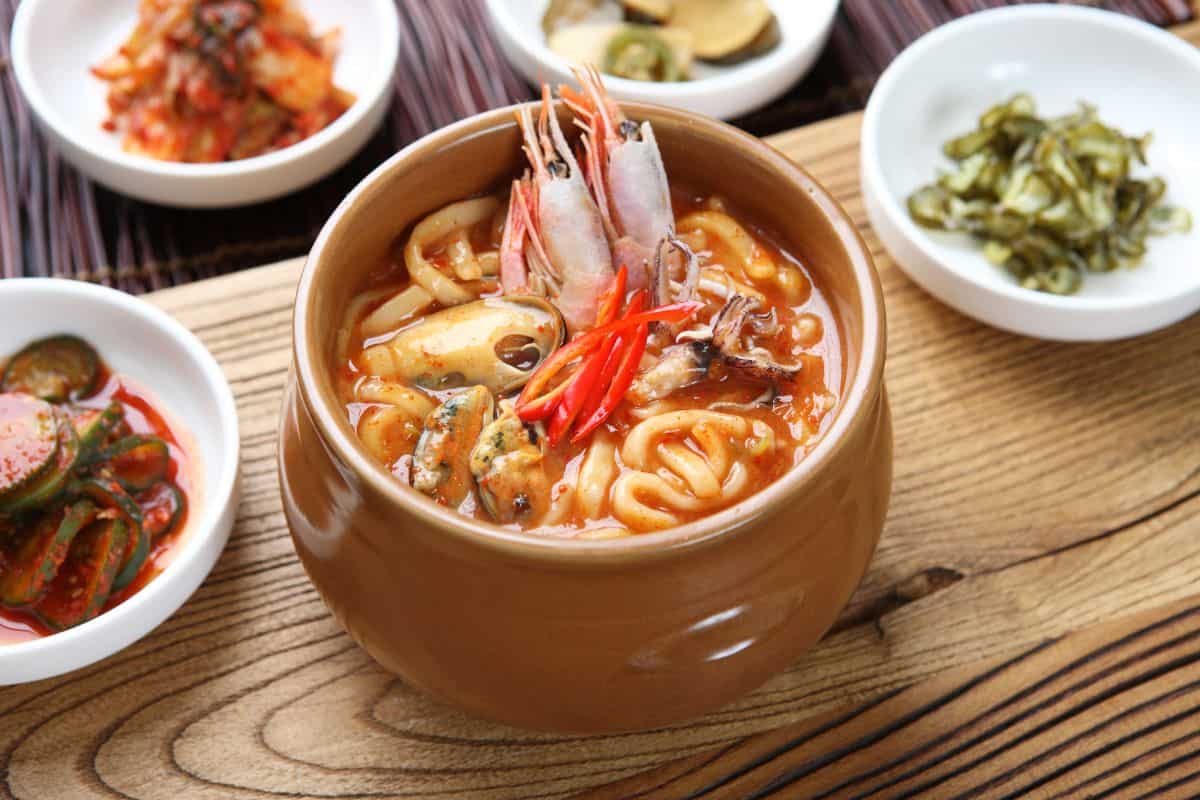
This is a port city, so there is seafood everywhere, but Busan also has some of the most comforting, everyday dishes in Korea. The food here feels a little saltier, heartier, and more grounded in market and port life.
What to eat in Busan:
- Dwaeji gukbap — pork soup with rice, one of Busan’s best-known comfort foods
- Milmyeon — cold wheat noodles with a chewy, refreshing bite
- Eomuk — Busan-style fish cake, especially from street stalls or specialty shops
- Hoe and other seafood dishes if you want the coastal side of the city
- Market snacks around Jagalchi, BIFF Square, and Bupyeong
Busan is great if you like food that feels local in a very lived-in way. It is not trying to impress you. It just knows what it does well.
🍚 Stop 3: Jeonju — The Region That Made Bibimbap a Legend
If you care about traditional Korean food, Jeonju deserves your attention.
This city has a huge reputation for food, and honestly, it earns it. Jeonju is where a lot of people go when they want Korean food that feels rooted, balanced, and tied to long-standing table culture.
What to eat in Jeonju:
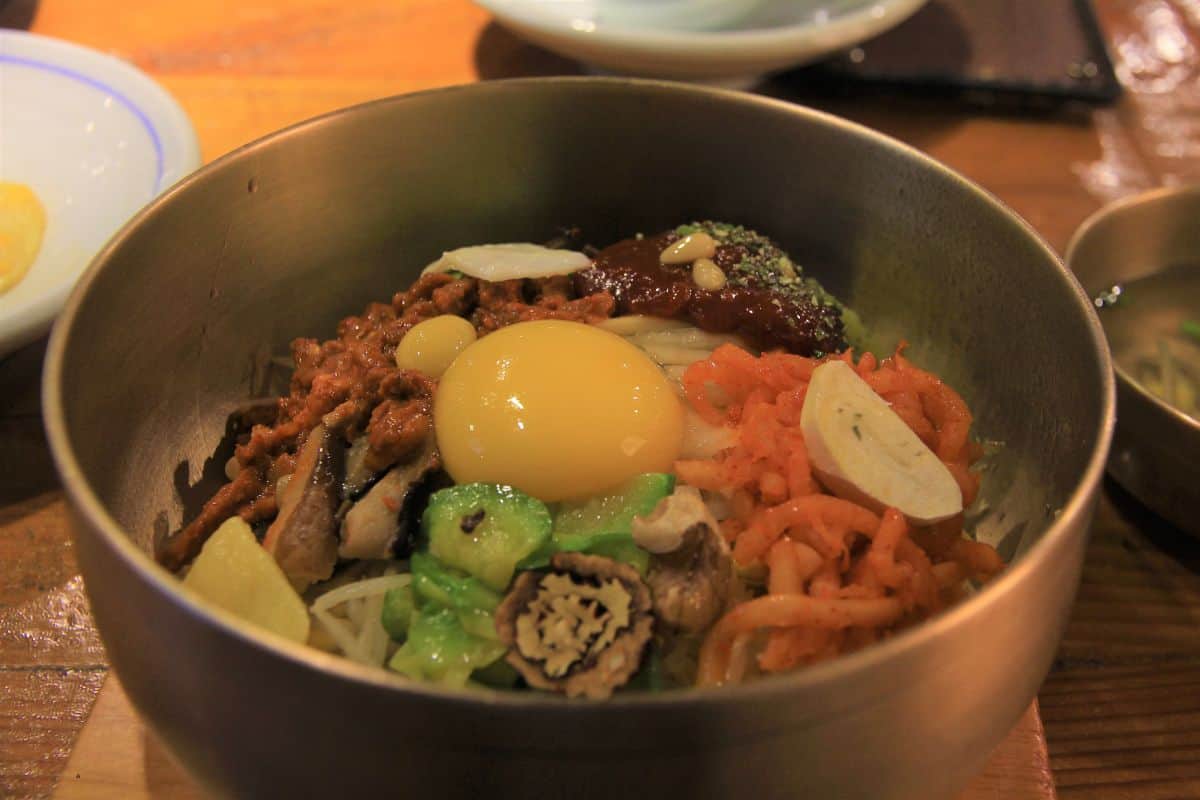
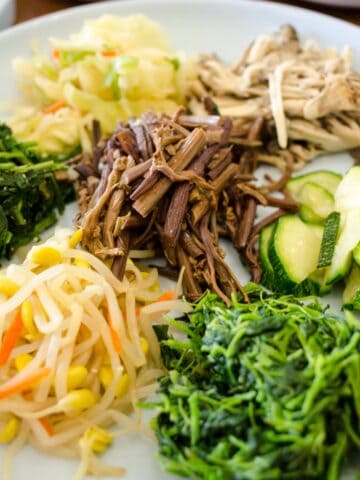
- Jeonju bibimbap — the famous version with a stronger reputation than the average bibimbap you find elsewhere
- Kongnamul gukbap — bean sprout rice soup, simple but deeply satisfying
- Hanjeongsik — a full traditional meal with many side dishes
- Traditional market snacks and local sweets around Jeonju Hanok Village
Jeonju food often feels more composed and more “complete” than flashy. It is a strong region for people who want to understand how much depth Korean home-style and traditional food can have.
🍗 Stop 4: Andong — Hearty Dishes and Historic Comfort Food
Andong has a different energy from the bigger, faster food cities. It feels older, heavier, and more tied to tradition.
This is the kind of place where the food carries a sense of history with it. You feel that in the flavors, in the names of the dishes, and in how the table is structured.
What to eat in Andong:
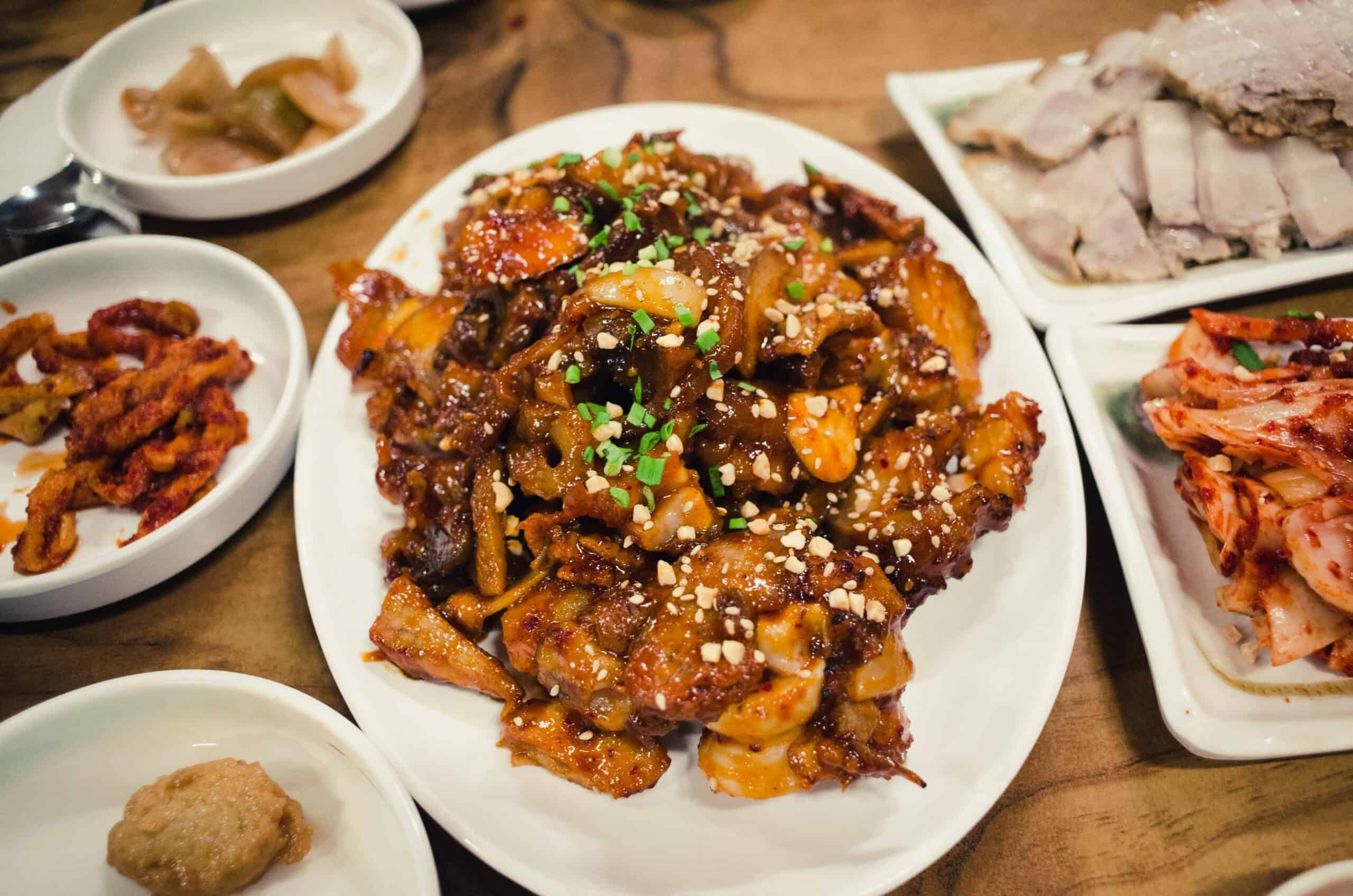
- Andong jjimdak — braised chicken with soy-based sauce, vegetables, and glass noodles
- Heotjesabap — a dish inspired by ceremonial food traditions
- Andong-style salted mackerel
- Other old-style, homier dishes that feel tied to the region’s heritage
Andong is a good stop if you like food that feels substantial and old-fashioned in the best way. It is not really a city of trendy snacks. It is a city of dishes with roots.
🐖 Stop 5: Jeju — Black Pork, Seafood, and Island Flavors
Jeju food has its own identity, and you can taste that pretty quickly.
Because it is an island, the food reflects both the sea and the land in a very distinct way. Jeju is especially known for pork, seafood, and ingredients that feel specific to the island rather than just “generically Korean.”
What to eat in Jeju:
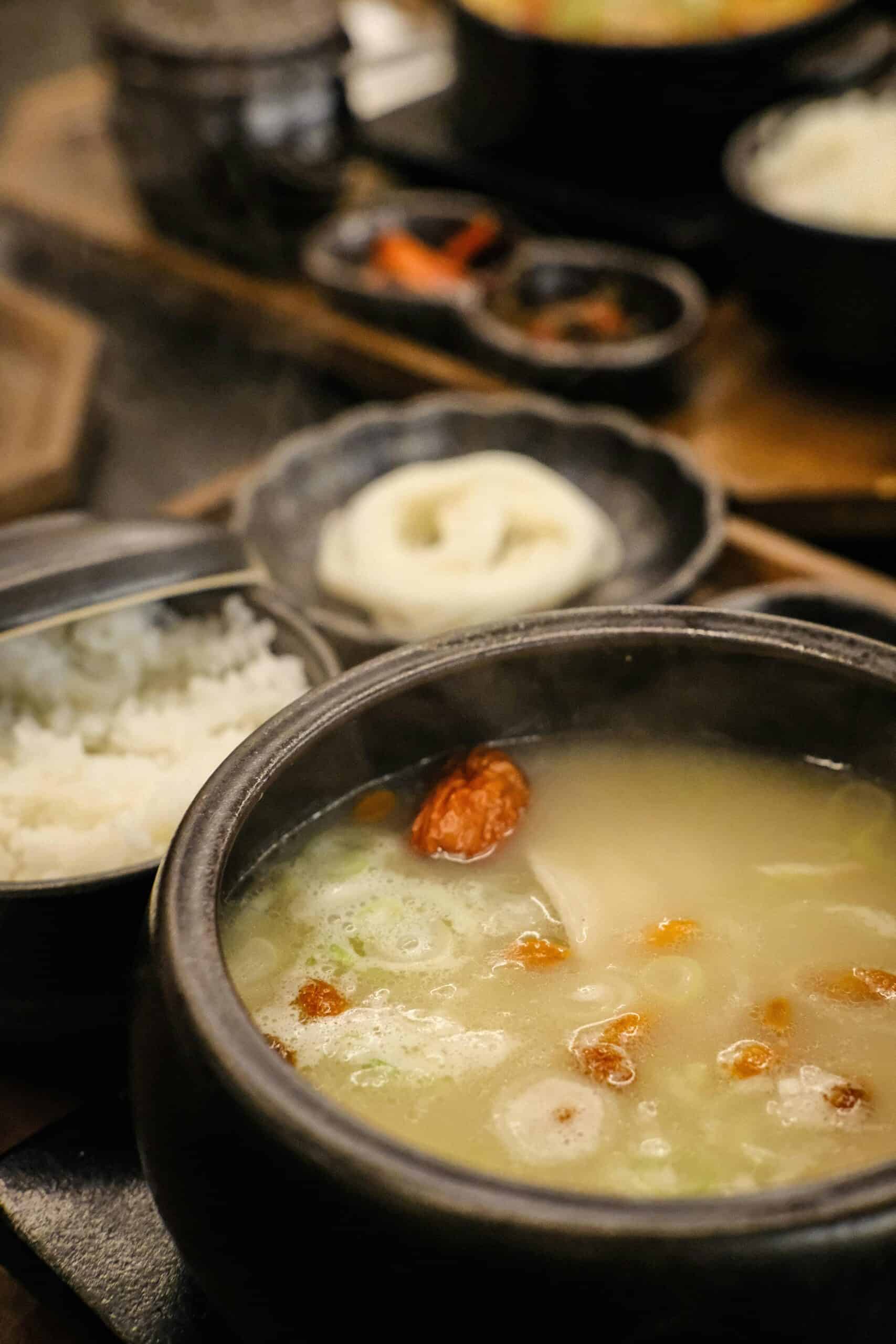
- Jeju black pork — probably the island’s most famous food export
- Abalone porridge if you want something gentler and more local-feeling
- Hairtail dishes
- Seafood noodles
- Hallabong or citrus-based desserts and drinks
Jeju is one of the best places in Korea to notice how geography shapes the table. The food feels simpler in some ways, but also more specific.
🌶️ Stop 6: Daegu — Bold Flavors and Punchier Comfort Foods
Daegu does not always get talked about first by international travelers, but the city has a strong food personality.
The food here can feel more direct, more intense, and a little bolder than what some first-timers expect. It is a good city for people who like dishes with stronger impact.
What to eat in Daegu:
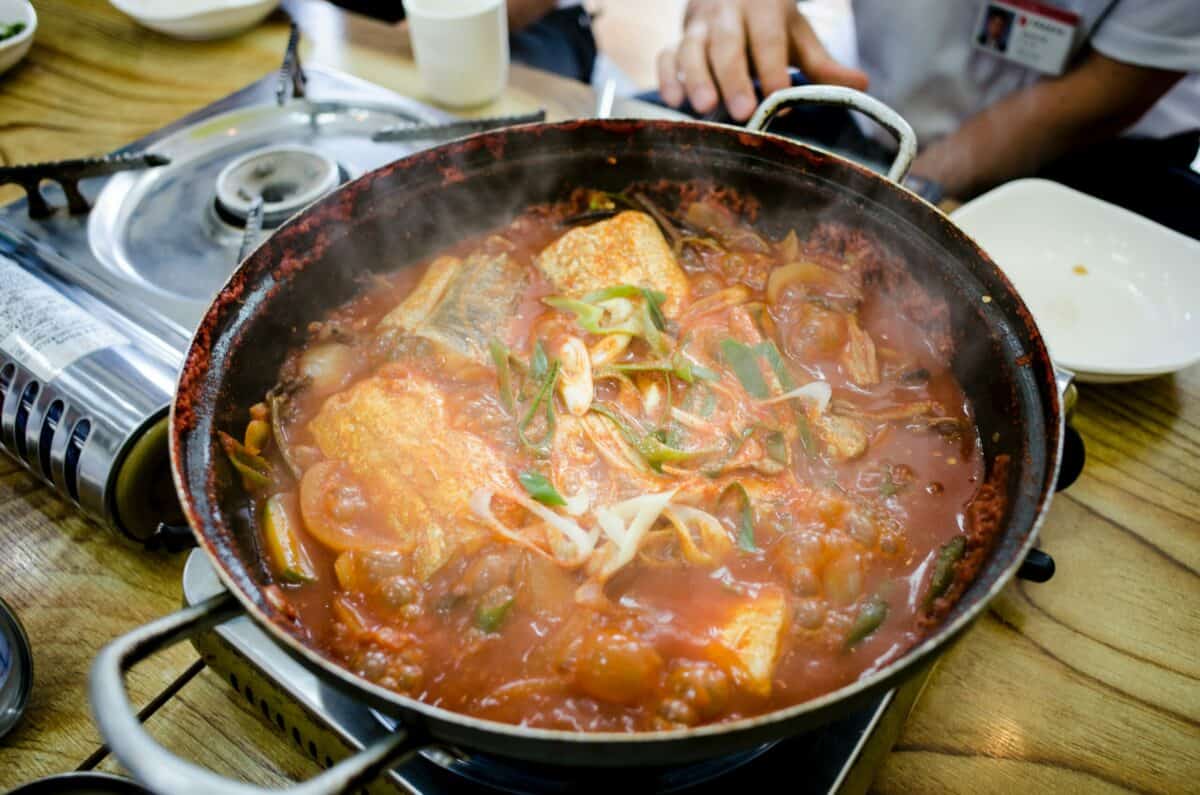
- Makchang — grilled pork or beef intestines, especially famous in Daegu
- Spicy beef soup and hotter comfort dishes
- Napjak mandu — flat dumplings, one of the city’s better-known street foods
- Other foods that lean savory, spicy, and deeply satisfying
Daegu is a nice reminder that Korean regional food is not always soft, refined, or carefully plated. Sometimes it is smoky, spicy, and meant to hit hard.
🦀 Stop 7: Gangwon — Buckwheat, Potatoes, and Mountain Logic
For the seventh stop, Gangwon is a great choice because it shows a totally different side of Korea.
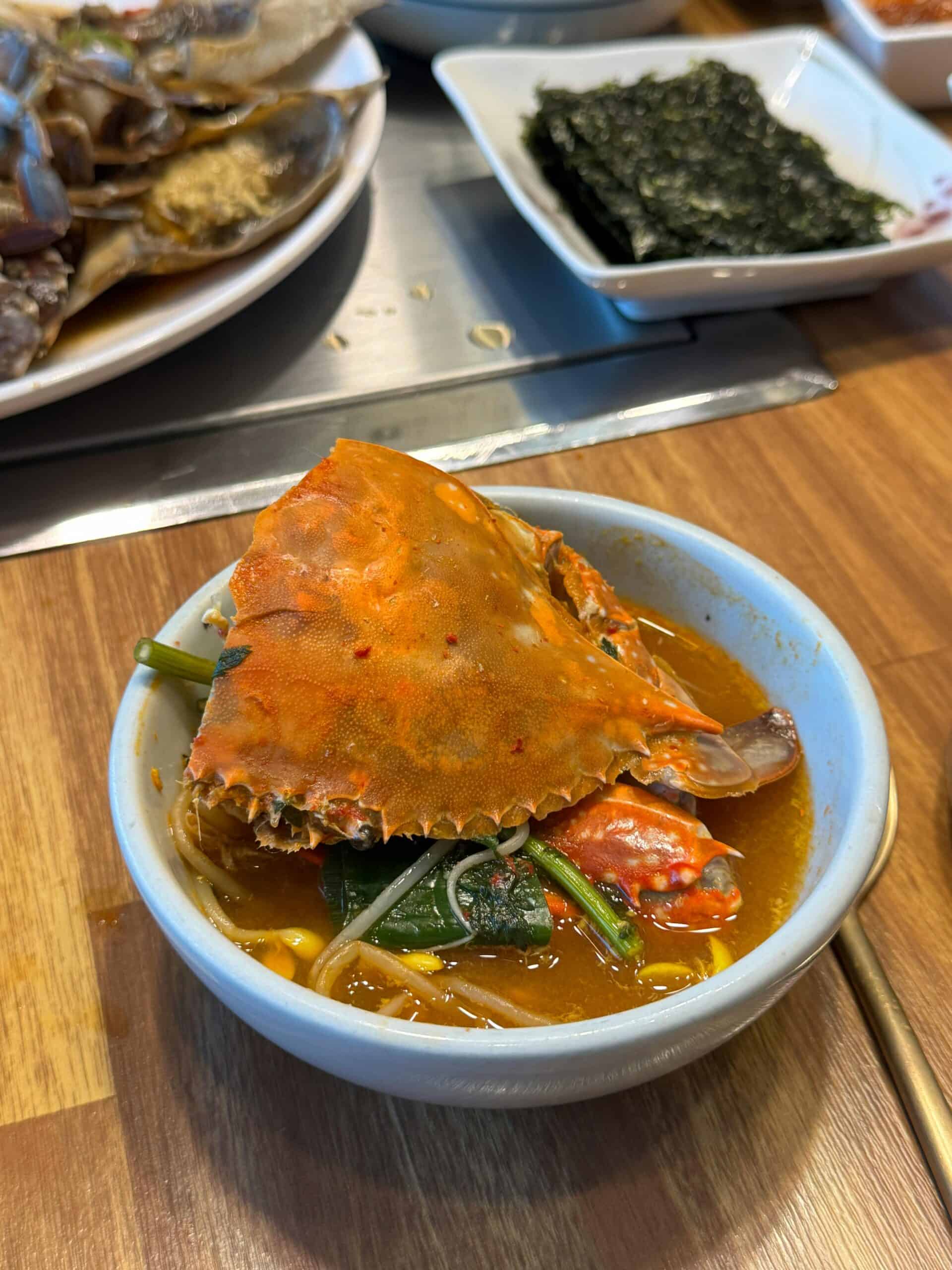
This is where mountain geography and colder weather really start shaping the food. If coastal food is about seafood and ports, Gangwon food is often about buckwheat, potatoes, wild greens, and hearty foods that make sense in a rougher climate.
What to eat in Gangwon:
- Makguksu — buckwheat noodles, one of the region’s most famous dishes
- Gamja ongsimi — potato dumpling soup
- Potato pancakes and other potato-based foods
- Mountain vegetables and greens
- Buckwheat dishes beyond just noodles
Gangwon is especially good for people who want to see that Korean food is not all red sauces and grilled meat. It has an earthier, quieter appeal.
🍽️ How to Use This 7-Stop Food Map on a Real Trip
You do not need to visit all seven places in one trip to get something out of this map.
A smarter approach is to use it in one of two ways:
The first is the “signature dish” method:
Try one major regional food from each place you visit. If you are in Busan, get the pork soup. If you are in Jeonju, prioritize bibimbap or kongnamul gukbap. If you are in Jeju, make sure black pork or abalone is on the list.
The second is the “go deeper” method:
Pick two or three regions and eat more intentionally there instead of trying to collect one dish from everywhere.
Both work. The point is not to complete the map like homework. The point is to notice how food changes with place.
💡 What This Food Map Says About Korean Cuisine as a Whole
The more you eat by region, the harder it becomes to think of Korean food as one single thing.
You start noticing that:
- some regions feel brothy and soft
- some feel bold and grilled
- some feel ceremonial or old-style
- some feel coastal and fresh
- some feel like survival foods turned into comfort foods
That range is what makes Korean cuisine so rewarding. It keeps opening outward. Just when you think you understand it, a new city hands you a dish that follows totally different logic and still feels fully Korean.
❓ Frequently Asked Questions
Seoul is the easiest starting point because it gives you access to many styles at once. But if you want one city with a strong food identity, Jeonju and Busan are both great picks.
Busan and Jeju are the strongest first choices, especially if you want seafood to feel central to the local food culture.
Jeonju and Andong are especially strong if you want food that feels tied to older traditions and historical table culture.
You can definitely find regional foods in Seoul. But eating them in the place they are associated with usually gives them more context, and often, better flavor too.

Comments
No Comments