
If Korea had a “winter starter pack,” these breads would definitely be in it.
When the weather gets cold, street stalls and convenience stores fill up with warm, handheld snacks: bungeoppang (fish-shaped bread), gukhwappang (flower-shaped mini breads), and hoppang (steamed buns). All three are cheap, cozy, and perfect for eating while your breath fogs in the air.
This post compares them by flavor, texture, where to buy, and typical price ranges, so you know what to grab first when you visit in winter.
Jump to:
- 🧣 Why “Korean Winter Bread” Is a Whole Cozy Season by Itself
- 🐟 What Is Bungeoppang? Fish-Shaped, Crispy & Classic
- 🌸 What Is Gukhwappang? Flower-Shaped Bite-Size Treats
- 🥯 What Is Hoppang? Steamed, Fluffy Convenience Store Comfort
- 🍡 Texture, Flavor & Mood: Which Bread Fits Which Craving?
- 🏪 Where to Buy Them: Street Stalls, Markets & Convenience Stores
- 💸 Price Ranges & Little Buying Tips
- ❓ Frequently Asked Questions
- 💬 Comments
🧣 Why “Korean Winter Bread” Is a Whole Cozy Season by Itself
In Korea, winter isn’t just cold, it’s a snack season.
You’ll see:
- Street carts steaming and sizzling near subway exits.
- People walking with paper bags of hot bread in one hand and pocketed hands on the other.
- Convenience stores stacking steamed hoppang near the counter like mini mountains.
These breads are:
- Cheap – you can try more than one without killing your budget.
- Portable – easy to eat while walking or waiting.
- Comforting – soft, sweet, and warm in your hands.
Each has its own personality, so let’s break them down.
🐟 What Is Bungeoppang? Fish-Shaped, Crispy & Classic
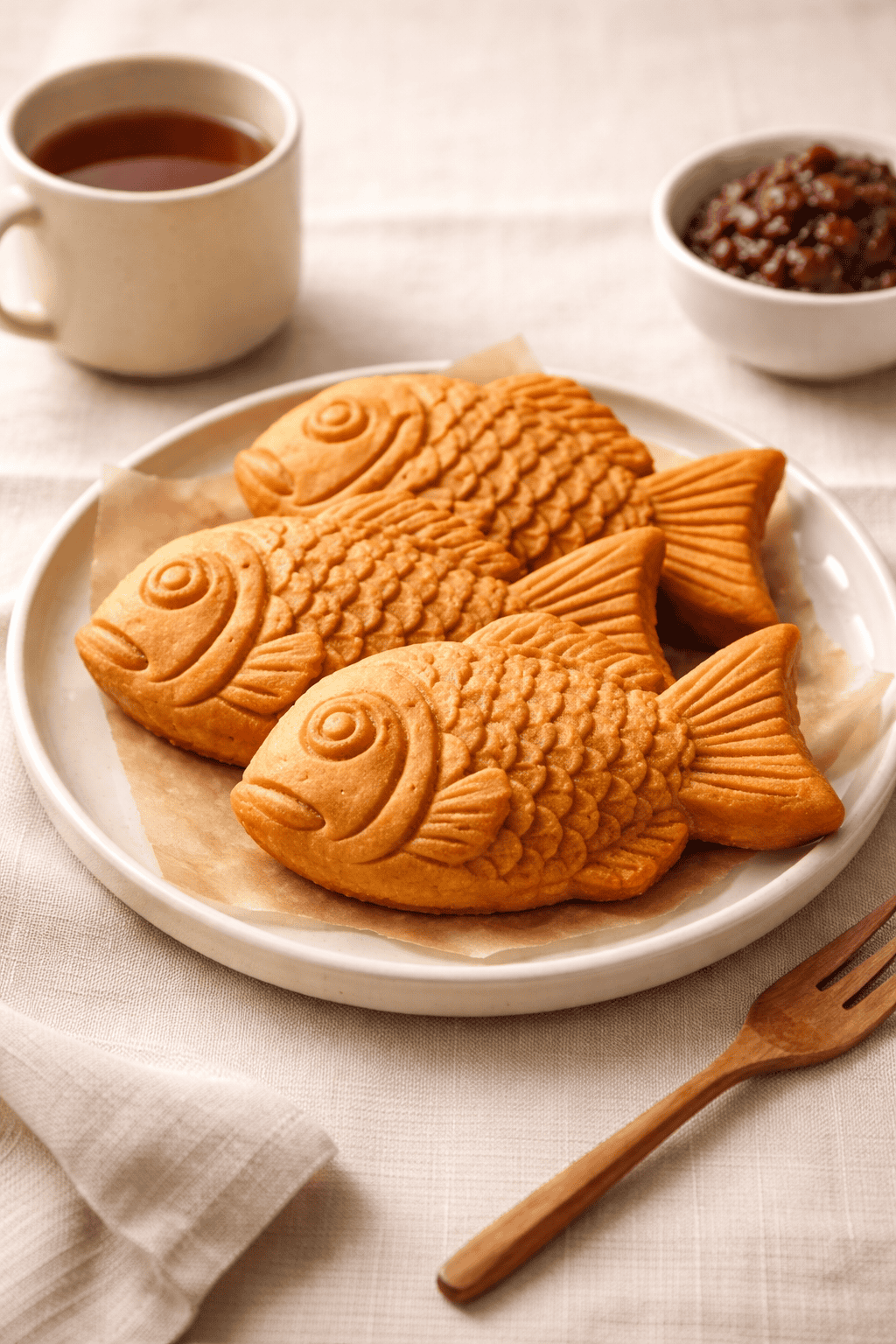
Bungeoppang (붕어빵) is probably the most iconic Korean winter bread.
What it looks like
- Shaped like a fish (specifically carp).
- Made from a pancake/waffle-style batter cooked in a metal fish-shaped mold.
- Crispy or slightly chewy on the outside, soft inside.
Common fillings
- Sweet red bean paste (most traditional)
- Custard/cream
- Sometimes choco or other creative fillings depending on the stall
Texture & vibe
- Best when freshly cooked: warm, slightly crisp at the edges.
- When it cools, it becomes softer and chewy, still good but less crunchy.
Where to buy
- Street stalls near subways, bus stops, school areas, local markets.
- Small carts that appear only in colder months.
- Occasionally in food courts or special winter pop-up stands.
Typical price range
- Often sold in sets:
- Around ₩1,000–₩2,000 for a few small pieces (like 3 or more).
- Larger or filled variations might cost a bit more.
- Still one of the most affordable winter snacks.
Best for: when you want a classic Korean winter street snack that feels very “K-drama walking home in the cold.”
🌸 What Is Gukhwappang? Flower-Shaped Bite-Size Treats
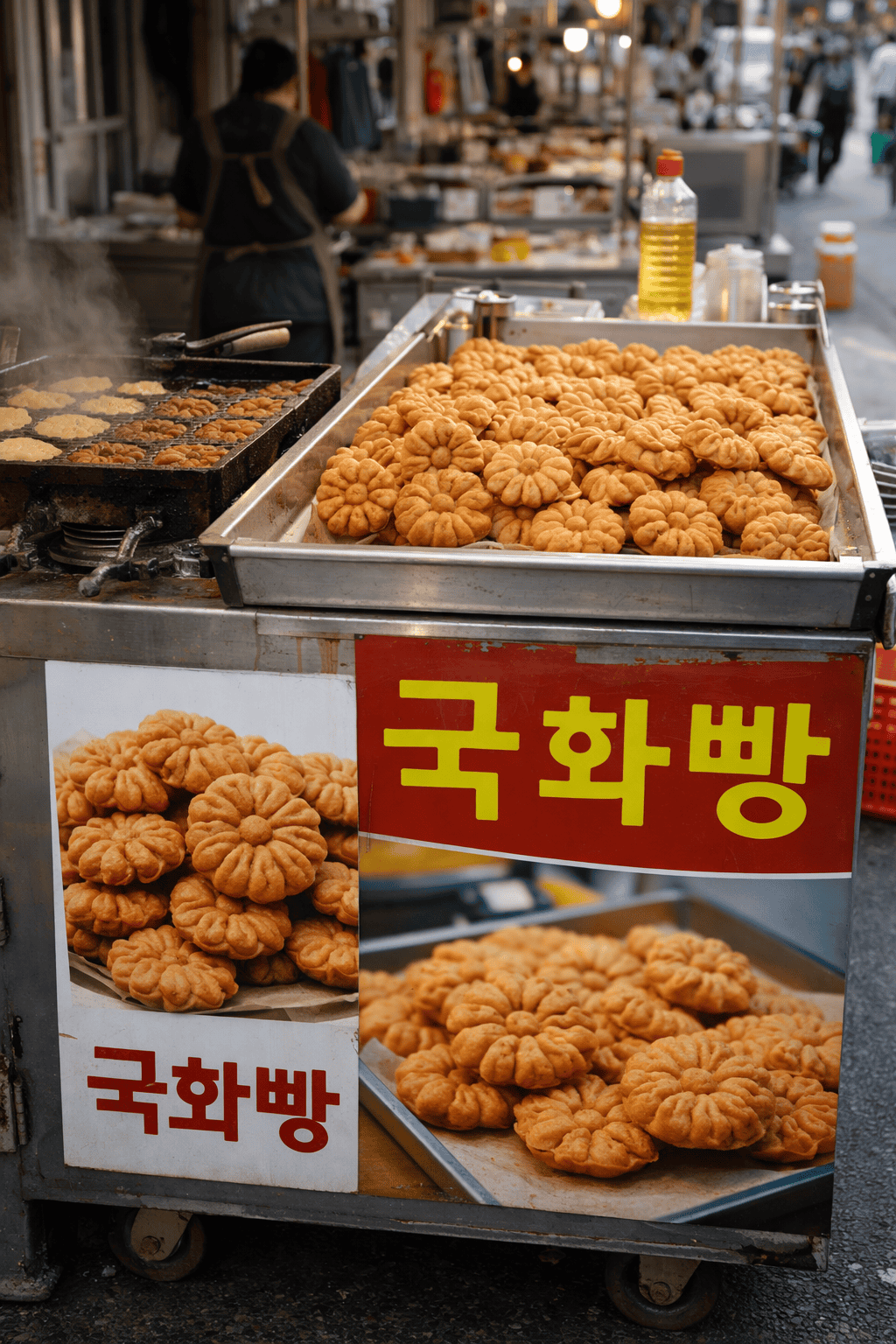
Gukhwappang (국화빵) literally means “chrysanthemum bread.”
What it looks like
- Small, flower-shaped mini cakes.
- Made from batter similar to bungeoppang, but smaller and rounder.
- Usually sold in batches or cups.
Common fillings
- Typically sweet red bean paste.
- Sometimes custard or other sweet fillings depending on the vendor.
Texture & vibe
- Softer than many bungeoppang versions, more like little filled cakes.
- Because they’re bite-sized, they’re perfect for popping into your mouth while walking or sharing with friends.
Where to buy
- Street carts around busier streets, subway stations, markets.
- Sometimes near schools or in walking streets with lots of foot traffic.
Typical price range
- Often sold by number (like 5–10 pieces) or in a paper tray/cup.
- Roughly ₩2,000–₩3,000 depending on size, quantity, and area.
Best for: when you want something shareable, snackable, and less messy than fish-shaped bread.
🥯 What Is Hoppang? Steamed, Fluffy Convenience Store Comfort
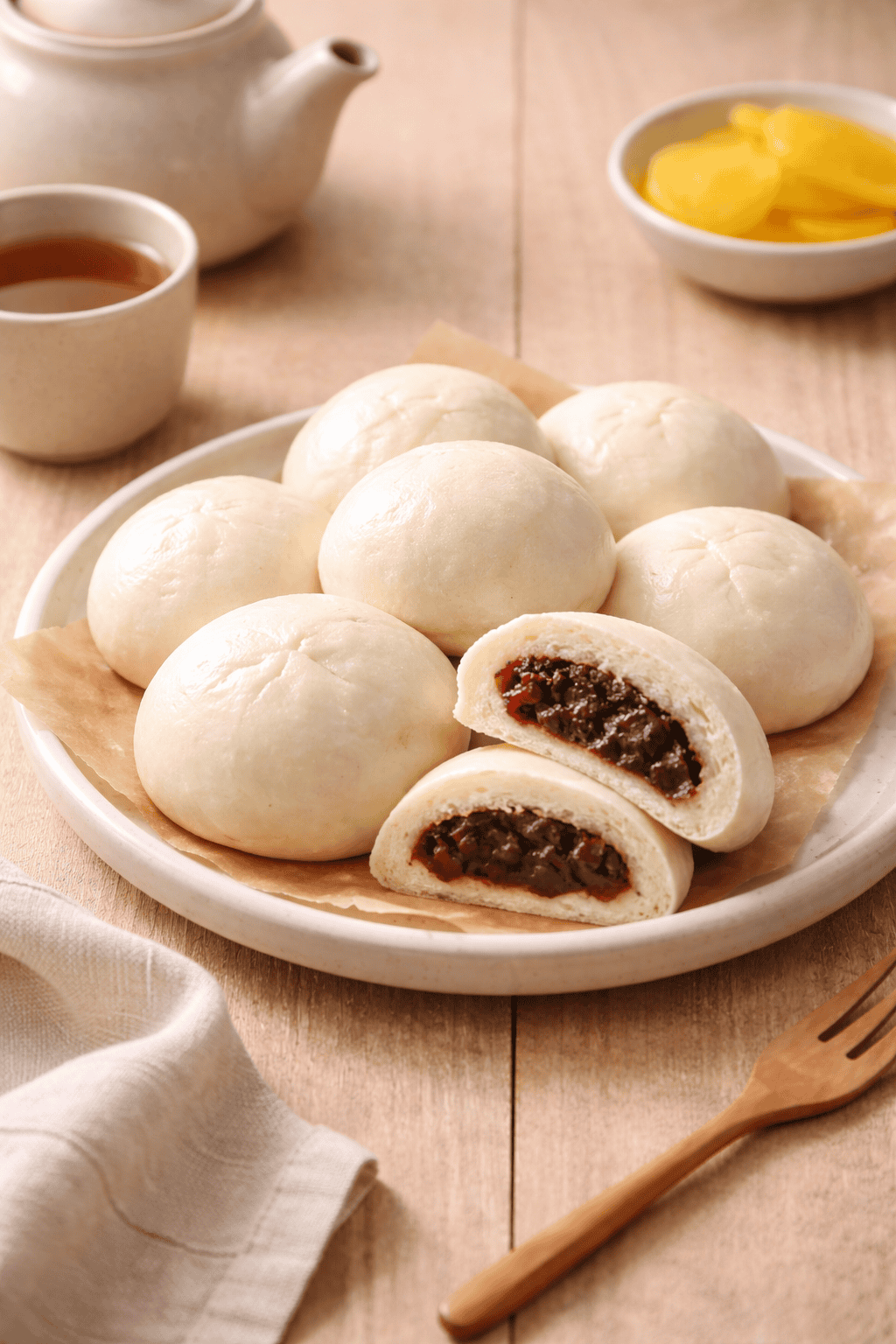
Hoppang (호빵) is basically the Korean version of a steamed bun—think super cozy bao-style bread.
What it looks like
- Round, smooth white steamed bun.
- Stored in a steamer case at convenience store counters or in some bakeries/stalls.
- You usually eat it by peeling the paper off the bottom and holding it in both hands.
Common flavors
- Red bean hoppang – traditional, sweet, and simple.
- Pizza hoppang – mozzarella + tomato + sausage/ham-style filling.
- Meat/vegetable hoppang – similar to meat buns or curry-style fillings.
- Flavors vary by brand and season, some stores have new or limited editions.
Texture & vibe
- Soft, fluffy dough with a warm, steamy interior.
- Heavier and more filling than bungeoppang or gukhwappang.
- Feels like a mini portable meal if you get savory flavors.
Where to buy
- Convenience stores (GS25, CU, Emart24, 7-Eleven) in winter, look for the hot steamer near the entrance or counter.
- Some bakeries or street stalls also sell steamed buns, but conbini hoppang is easiest to find.
Typical price range
- Usually around ₩1,000–₩2,000 per bun, depending on brand, size, and filling.
- Still very budget-friendly, especially for how filling it is.
Best for: cold nights, quick comfort, or when you want something warm and soft you can eat in a couple of bites (or many big ones).
🍡 Texture, Flavor & Mood: Which Bread Fits Which Craving?
If you want something… crispy and classic
→ Bungeoppang
- Crisp edges, warm middle.
- Signature fish shape.
- Feels nostalgic and very “street food.”
If you want something… bite-sized and easy to share
→ Gukhwappang
- Smaller, flower-shaped pieces.
- Easy to pass around or eat one-by-one while chatting.
- Less messy, more “pop into your mouth” style.
If you want something… soft, fluffy, and filling
→ Hoppang
- Steamed bun texture.
- Savory options can feel like a mini meal.
- Great for when you’re cold and want something that feels like a hug from inside.
You really can’t go wrong with any of them, it just depends on your mood.
🏪 Where to Buy Them: Street Stalls, Markets & Convenience Stores
Bungeoppang & Gukhwappang:
- Look for small carts with metal molds and batter being poured in, often near:
- Subway exits
- Busy intersections
- School areas
- Traditional markets
Tips:
- If you see lots of locals lining up, that’s a good sign.
- Freshly made is always best: try to get ones that are just coming off the mold.
Hoppang:
- Head to any convenience store in winter:
- GS25
- CU
- Emart24
- 7-Eleven
- Look for the round steamer machine with buns inside, usually labeled by flavor.
- Just tell the cashier how many and which type you want.
You might also find hoppang in:
- Supermarkets (frozen section) to steam at home.
- Some bakeries or snack stands.
💸 Price Ranges & Little Buying Tips
Prices can vary by city and location, but general ranges:
- Bungeoppang:
- Around ₩1,000–₩2,000 for a small set (several fish).
- Gukhwappang:
- Roughly ₩2,000–₩3,000 for a batch (cup/tray).
- Hoppang:
- Typically ₩1,000–₂2,000 per piece in convenience stores.
Little tips
- Go when it’s busy – higher turnover usually means fresher bread.
- If you’re sensitive to sweetness, ask for or look for custard or savory options instead of red bean.
- At convenience stores, check the labels or display cards to know which hoppang is which (bean, pizza, meat, etc.).
- If you really love them, browse supermarket frozen aisles to take some home and reheat.
❓ Frequently Asked Questions
Yes. While many bungeoppang and gukhwappang are sweet (red bean, custard), hoppang has savory options like pizza, meat/vegetable, and curry-style fillings. Some stalls and specialty spots may also offer creative flavors.
They’re strongly associated with cold weather, especially street stall versions. In many places, bungeoppang and gukhwappang carts only appear in autumn and winter. Hoppang in convenience stores is also seasonal, you’ll mostly see the steamers out during colder months.
Yes, especially bungeoppang and hoppang. Supermarkets often sell frozen packs you can air fry, pan-cook, steam, or microwave. It won’t be exactly the same as a street stall, but it’s pretty close (and very convenient if you miss them).

Comments
No Comments