
Few countries throw a national holiday for their alphabet, but Korea does, and it's one of the most rewarding days to be in Seoul. Hangul Day falls on Friday, October 9, 2026, creating a three-day weekend right in the middle of perfect autumn weather. Whether you're studying Korean, visiting for the first time, or just curious about those neat little syllable blocks on every sign, here's what the day means and how to celebrate it like a local.
Jump to:
📜 What Is Hangul Day?
Hangul Day, or Hangeullal (한글날), celebrates the proclamation of the Korean alphabet by King Sejong the Great in 1446, when he published it in a document called Hunminjeongeum, meaning "the proper sounds for instructing the people." October 9 is a national public holiday, so schools and government offices close, and the government holds an official ceremony each year. The holiday was actually dropped from the list of days off in 1991, then restored as a public holiday in 2013 after years of public support. For an overview of how it fits alongside Chuseok, Seollal, and the rest of the calendar, see our complete guide to Korean holidays.
👑 King Sejong and the Science of Hangul
Before Hangul, Koreans wrote using Chinese characters, which took years to learn and kept literacy largely limited to the elite. King Sejong wanted a script ordinary people could master quickly, and the result is often praised as one of the most logical writing systems in the world. The basic consonants were designed to reflect the shape of the mouth, tongue, and throat when making each sound. The vowels are built from three simple symbols representing heaven, earth, and humanity. Letters then stack into syllable blocks, so a beginner can learn to sound out words in a matter of hours. The original Hunminjeongeum manuscript is listed on UNESCO's Memory of the World Register.
🏛️ Where to Celebrate in Seoul
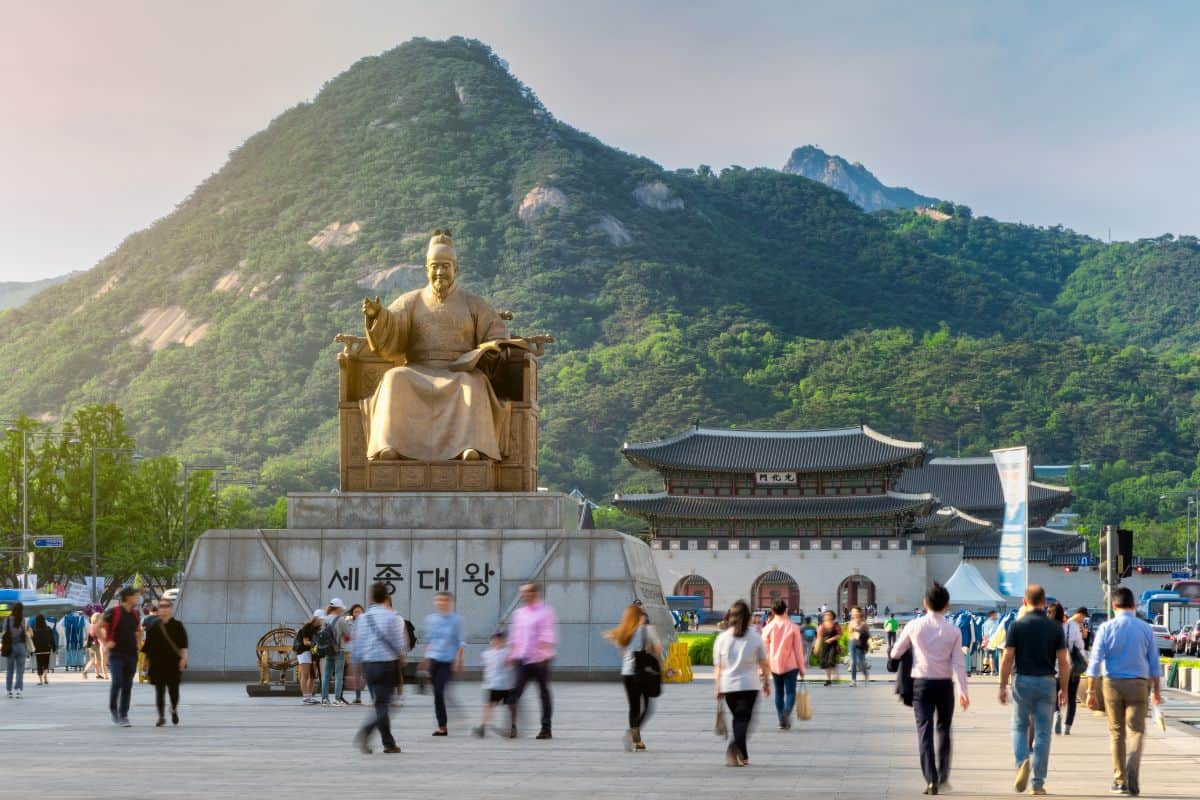
Gwanghwamun Square is the heart of the day, anchored by the giant golden statue of King Sejong facing Gyeongbokgung Palace. Look for performances, exhibitions, and events around the square on and around October 9. Just beneath the statue, the free underground exhibition "The Story of King Sejong" walks you through his inventions, including Hangul, rain gauges, and water clocks. For a deeper dive, the National Hangeul Museum in Yongsan, right next to the National Museum of Korea, has free permanent exhibits on how the script developed and hands-on displays for learners. Both are easy to reach by subway and make a great half-day itinerary for anyone interested in language, history, or design.
✍️ Hands-On Ways to Join In
Hangul Day is a great excuse to get creative. Many cultural centers and museums run calligraphy (seoye) sessions where you can try writing your name in Hangul with a brush, and some offer bookmark or fan-painting workshops you can take home as a souvenir. If you're learning Korean, set yourself a mini challenge: read every shop sign on one street, or order your entire lunch in Korean. Bookstores like Kyobo near Gwanghwamun are fun to browse for Hangul-themed stationery and design goods. And if you'd like to pair the holiday with more sightseeing, our list of things to do in Seoul has plenty of nearby palaces, markets, and cafés to fill the rest of your day.
📅 Planning Around the Long Weekend
Because October 9, 2026 lands on a Friday, many locals will take a three-day weekend, so expect busier trains, highways, and popular day-trip spots. The good news is that Hangul Day is far calmer than Chuseok; most restaurants, shops, and attractions in Seoul stay open, and the city doesn't empty out the way it does during the harvest holiday. Book KTX tickets early if you plan to leave the city, and visit Gwanghwamun in the morning before the crowds. Early October weather is usually clear and mild, perfect for walking between the palace, the square, and the surrounding neighborhoods of Seochon and Insadong.
❓ Frequently Asked Questions
Hangul Day is on Friday, October 9, 2026. It's a national public holiday in South Korea and falls on October 9 every year.
Hangul was created under King Sejong the Great of the Joseon Dynasty and proclaimed in 1446 through the Hunminjeongeum document.
Yes, most shops, restaurants, and tourist attractions in Seoul stay open. Government offices, banks, and schools close for the holiday.
Yes, the National Hangeul Museum in Yongsan offers free admission to its permanent exhibitions, though some special programs may require booking.

Comments
No Comments