
Most grocery shoppers who've bought a red bag of Buldak have no idea it comes from Samyang, a company that's been making instant noodles since long before "fire noodles" existed. That's how completely one product line has swallowed its own parent brand. In 2026, Buldak isn't just a noodle anymore, it's one of Korea's most effective pieces of food-driven cultural export, and it all traces back to a single video.
Jump to:
🔥 Where the Fire Noodle Challenge Actually Started
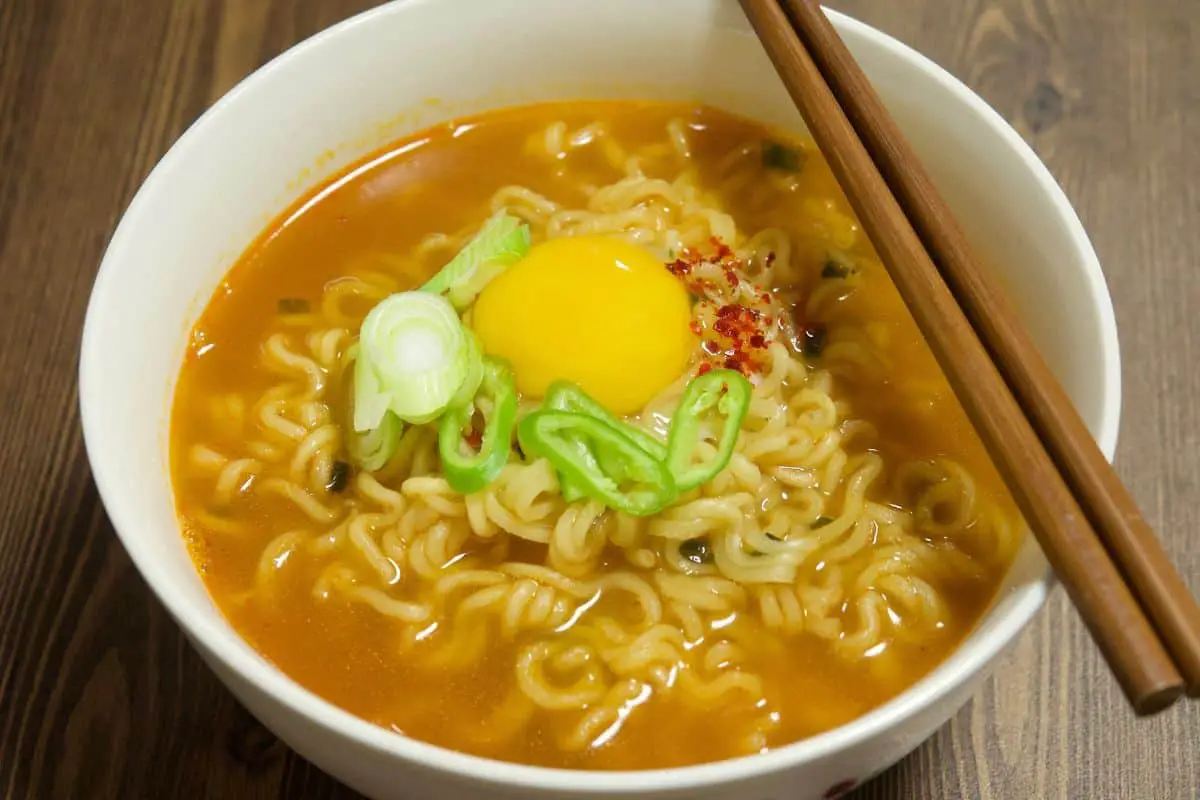
In 2014, a Korean YouTuber posted a video attempting to finish a full package of Buldak noodles without drinking water. That clip sparked the 불닭 챌린지, the Fire Noodle Challenge, a self-replicating format where people film themselves eating Buldak and capture their unfiltered reaction to the heat. It spread across Asia first, then globally, eventually generating over a million videos on YouTube alone.
🍜 Why the Original 2012 Launch Almost Didn't Matter
The original red-bag Buldak launched in April 2012, two years before the challenge that made it famous. On its own, it was just another spicy instant noodle in a crowded category. The Fire Noodle Challenge is what turned a product into a phenomenon, proof that a genuinely painful eating format, filmed and shared, can outperform any amount of conventional advertising.
📈 What Buldak Is Worth to Samyang Now
The numbers back up just how central this one product line has become. Samyang Foods' Buldak ramen now accounts for roughly 60% of Korea's total ramen exports, and the company's 2026 revenue is projected to hit somewhere between 2.8 and 3 trillion won, with operating profit margins holding at 22 to 24%. That's an extraordinary amount of a national industry's export volume riding on a single noodle brand, and on a marketing moment nobody at the company planned.
🎪 From Mukbang Videos to Music Festival Sponsorships
The video-driven growth engine never really stopped, it just changed format. Buldak content is deeply tied to Korea's broader mukbang culture, where eating-focused creators kept the brand visible long after the original challenge cooled off. That visibility has since translated into real-world partnerships, including Samyang America's deal making Buldak the official ramen and hot sauce partner of the Coachella Valley Music and Arts Festival for a second consecutive year in 2026.
✈️ Korea Is Now Trying to Turn It Into a Travel Draw
Perhaps the clearest sign of how seriously Buldak is taken as a cultural asset: Korean tourism officials are actively working to turn Buldak into a gateway product for travelers, using the noodle's global recognition to pull curious fans toward an actual trip to Korea rather than just another online challenge video. It's the same logic driving interest in Korea's other convenience store food combos, where a product people already know from social media becomes the reason to seek out the real thing in person.
❓ Frequently Asked Questions
No. Most people who buy Buldak today eat it as a regular, if unusually spicy, instant noodle rather than attempting the original no-water eating challenge, which remains a niche stunt rather than the standard way to eat it.
Yes. Buldak is a product line made by Samyang Foods, though the Buldak brand has become so dominant that many buyers aren't aware of the parent company behind it.
Buldak was specifically formulated around an extreme heat level as its core identity, which is what made it suited to a no-water eating challenge in the first place, unlike moderately spicy noodles built for everyday eating.
Given its ongoing brand partnerships, including recurring music festival sponsorships, and its outsized share of Korea's ramen exports, Samyang has strong incentive to keep expanding the Buldak line rather than treat it as a finished product.

Comments
No Comments