
Korean café culture used to mean coffee first, pastry second. That's flipped. Bakeries are now the destination, with lines forming before opening and entire trips built around a single loaf, and the "Open Run" culture that used to be reserved for limited sneaker drops has quietly taken over Korea's pastry scene instead.
What's driving it isn't one viral item, it's a string of them, each one riding the last one's momentum before the next thing takes over the feed.
Jump to:
🥖 What Sogeum-Ppang (Salt Bread) Actually Is
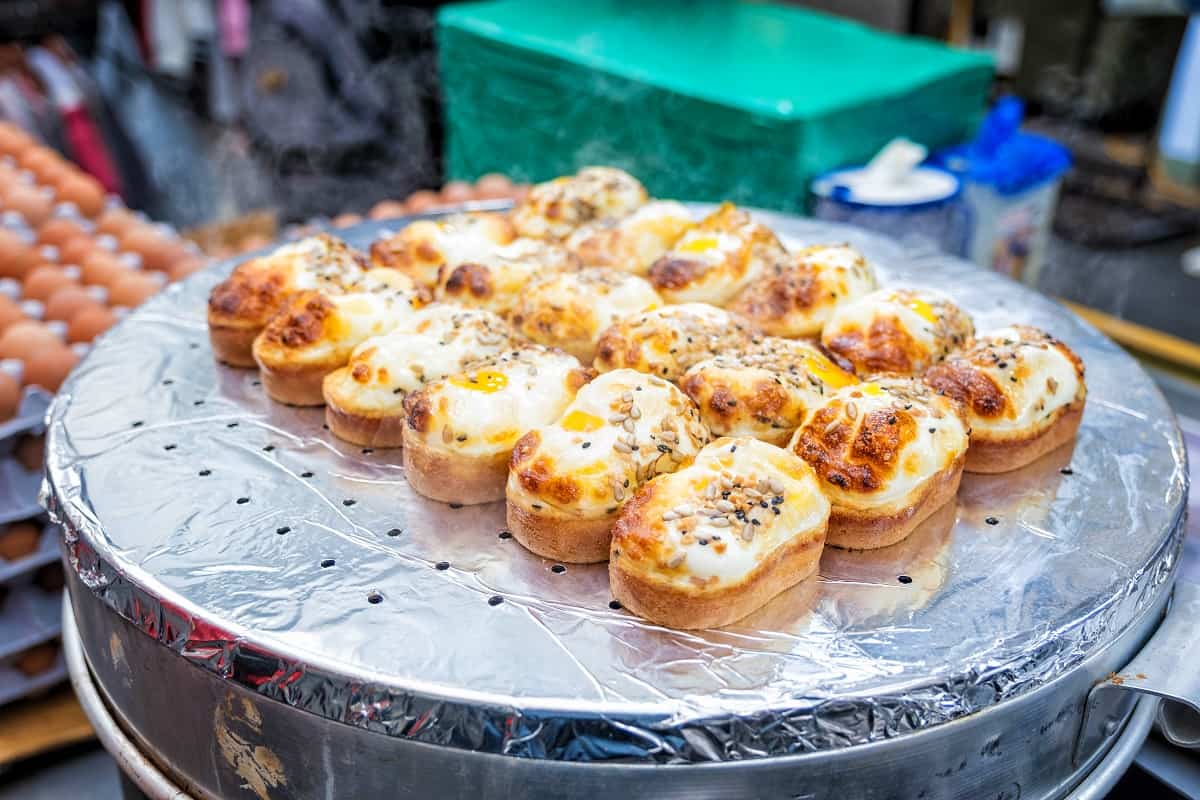
Salt bread, or sogeum-ppang, is the trend that kicked this current wave off. It's a non-laminated milk bread, hand-rolled around a brick of butter that melts during baking, leaving a crisp, croissant-like base with a hollow center and a soft, bread-like top. It's technically a sibling of the lighter Japanese shio pan, which crossed into Korea in the early 2020s and exploded into its own category by 2025. The appeal is almost entirely textural: crackly and buttery on the bottom, pillowy on top, gone in about four bites.
🐴 Ugly Pony Bread and the Rise of "So Ugly It's Cute"
The newest entrant is "ugly pony bread," a hot dog bun filled with whipped cream and drizzled in white chocolate, finished with off-center chocolate chip eyes and a nose that give it a slightly dazed, cross-eyed expression. The intentional imperfection is the whole point, since a bakery item that looks a little wrong photographs better than one that looks factory-perfect, and that's exactly the kind of image that gets a bakery its next line out the door.
🧻 Towel Cakes and What's Coming Next
Behind salt bread and pony bread, a handful of other items are building momentum. Towel cake, a chewy dessert inspired by the Chinese manjinjian, rolls thin crepes with layers of cream to resemble a neatly folded towel. Crème brûlée French toast, thick brioche or milk bread prepared like French toast and finished with a torched sugar crust, is showing up on more brunch menus by the week. Neither has fully broken out yet, but both follow the same formula that made salt bread and pony bread work: a familiar base, a slightly theatrical presentation, and a texture built for video.
☕ Why Bakeries Are Becoming the New Cafés
This didn't happen in isolation. It's an extension of the same café-hopping culture that turned neighborhoods like Seongsu into full-day itineraries, just with the emphasis shifted from the drink to what's sitting next to it. A well-designed bakery gets the same treatment a concept café used to get: people will cross the city for one specific item, photograph it before touching it, and move on to the next spot before their coffee's even gone cold.
🗺️ Where This Fits Into Korea's Bigger Dessert Moment
Bakeries are really just the latest chapter in a food culture that's been running on rapid trend turnover for a while now, the same pace that's kept Korea's dessert scene cycling through Dubai chocolate, bingsu, and butter rice cakes without ever really slowing down. Bread just happens to be the format having its moment right now.
❓ Frequently Asked Questions
Not quite. Salt bread uses a non-laminated milk dough rolled around a block of butter rather than the folded, laminated dough used for croissants, which gives it a similar crisp base but a softer, breadier top instead of flaky layers throughout.
The imperfection reads as more authentic and more shareable. A slightly lopsided, cartoonish pastry stands out in a feed full of polished bakery shots, which has made intentional "ugliness" its own aesthetic strategy.
For the most popular bakeries, yes. "Open Run" culture, showing up before opening to beat the line, has carried over from limited sneaker and merch drops into bakery hauls for the most in-demand items.
Seoul is where most of these trends originate and peak first, but salt bread and similar viral bakery items have spread to Busan and other major cities as regional bakeries pick up on what's working in the capital.


Comments
No Comments