
Ask a foreigner what Korean holidays or birthdays are about and they'll usually mention family, ancestral rites, or a big gathering. But the food on the table is doing just as much work as the gathering itself — every dish has a specific job, whether that's honoring an ancestor, marking a new year of age, or, in one strange case, warding off bad exam luck.
Chuseok, Seollal, and birthdays each come with their own calendar and rituals, but for now, we're skipping straight to what actually ends up on the table.
Here's what Koreans really eat for Chuseok, Seollal, and birthdays — and why.
Jump to:
🌕 What Chuseok Food Is Really About
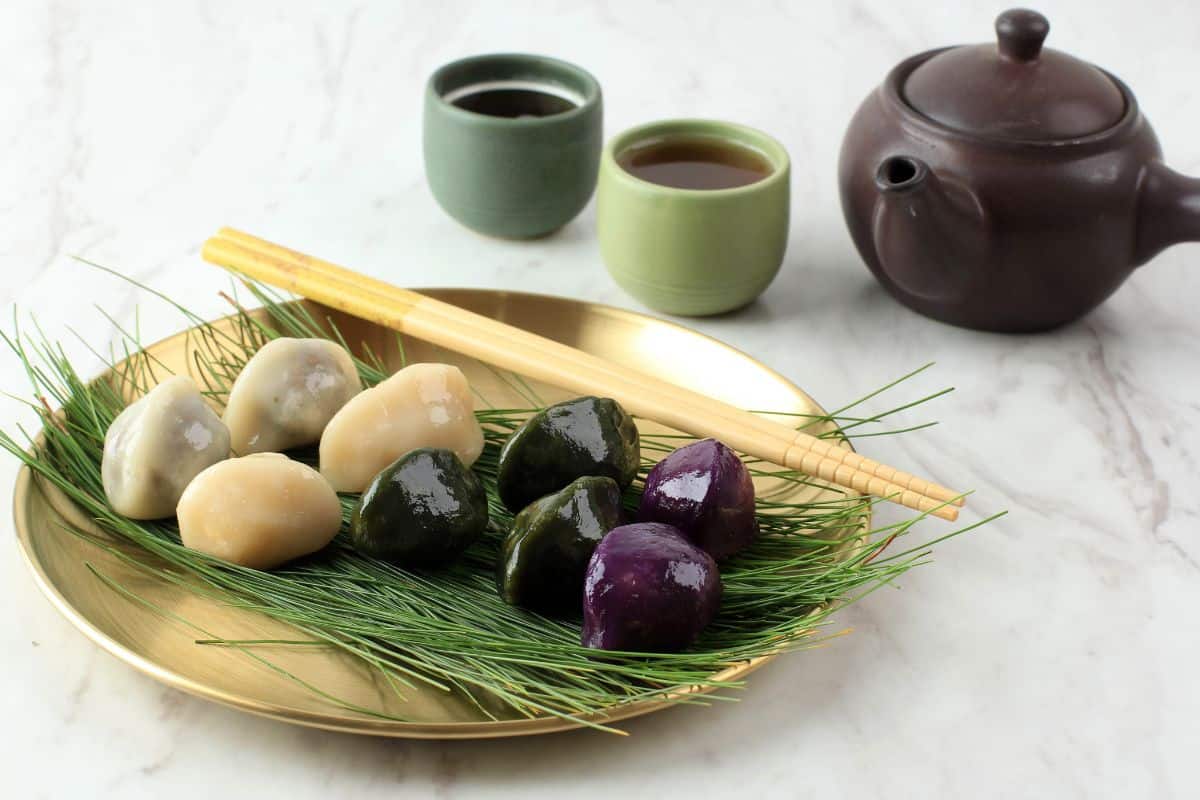
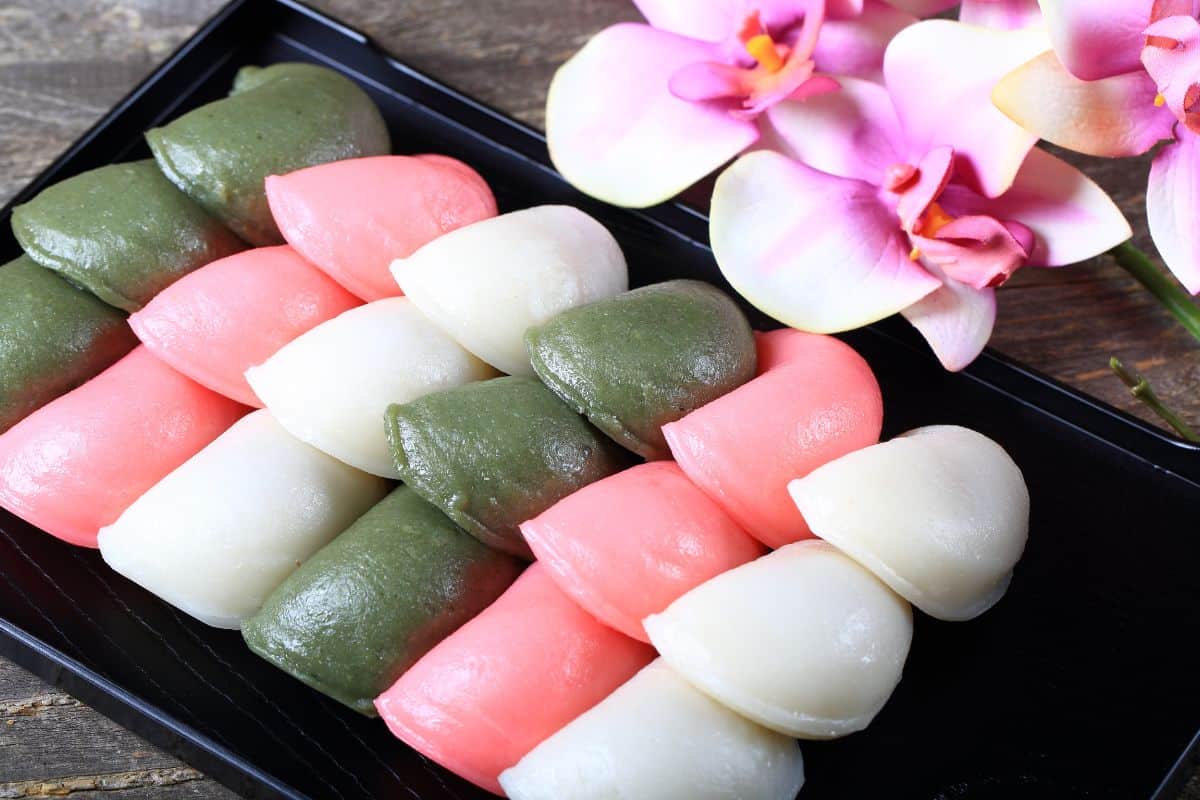
Chuseok, Korea's harvest festival, is built around gratitude for the year's harvest, and the food reflects that directly. The centerpiece is songpyeon, half-moon-shaped rice cakes traditionally made with freshly harvested rice rather than rice from storage. That distinction mattered enough that the freshly-harvested version had its own name, oryeol songpyeon, to set it apart from songpyeon made any other time of year.
The rest of the table usually includes japchae (stir-fried glass noodles), toranguk (a mild taro soup), grilled fish, and a spread of in-season fruit like Korean pears, persimmons, and jujubes. Much of this food is first prepared as an offering for jesa, the ancestral memorial rite, and only eaten by the family afterward — the meal is as much ritual as it is dinner.
For the full breakdown of the holiday itself, our complete guide to Chuseok covers the traditions, timing, and etiquette in more depth. If you've never made japchae yourself, it's worth knowing before you sit down to a Chuseok table.
🎊 What Seollal (Lunar New Year) Food Is Really About
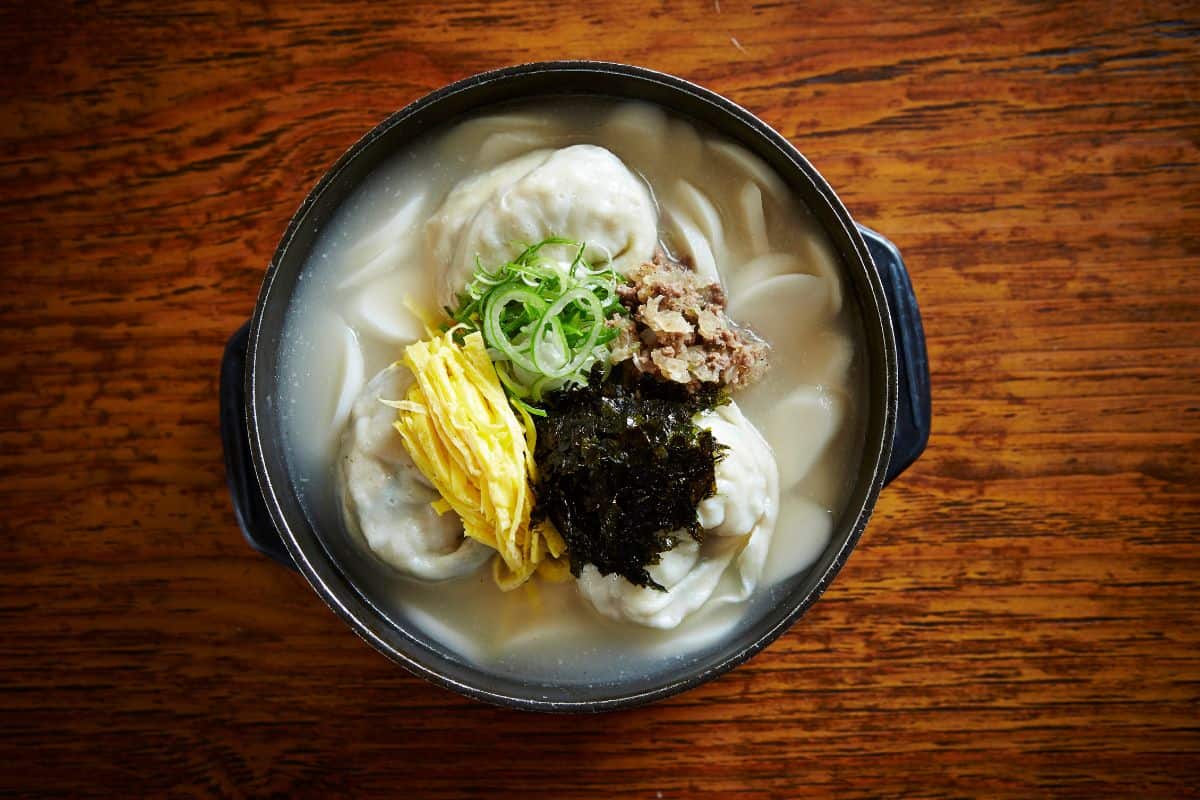
Seollal's signature dish is tteokguk, a soup made with thin ovals of sliced rice cake in a savory broth. The tradition goes beyond just being tasty: there's a long-standing belief that eating a bowl of tteokguk on Seollal is what actually makes you a year older, which is why Koreans will sometimes ask how many bowls of tteokguk someone has eaten as a roundabout way of asking their age.
Many families serve manduguk, a dumpling version of the same soup, either instead of or alongside tteokguk, especially in regions and households where mandu are the bigger tradition. Jeon (savory pan-fried fritters) and yakgwa (a honey-soaked fried cookie) round out the table, and like Chuseok, food is prepared for charye, the New Year's ancestral rite, before the family eats.
Our guide to Seollal covers the rest of the holiday, from the bowing ritual (sebae) to the etiquette around new year's money.
🎂 What Koreans Actually Eat on Their Birthday
Korean birthdays have one non-negotiable dish: miyeokguk, a seaweed soup usually made with beef, though seafood versions exist too. Unlike Chuseok or Seollal food, this one isn't really about the calendar — it's about honoring mothers. The tradition ties back to Korea's postpartum recovery customs, where new mothers ate seaweed soup for weeks after giving birth, since seaweed was believed to help recovery and lactation. Over time, Koreans started eating it on their own birthdays too, as a way of marking their mother's labor along with their own age.
Some versions of the tradition connect the dish to Samsin Halmoni, a trio of grandmother goddesses associated with childbirth and destiny in Korean folk religion. These days, it's common for the soup to show up alongside a Western-style birthday cake rather than instead of it — the modern Korean birthday table often has both.
📝 The Exam-Day Superstition Nobody Explains to Visitors
Here's the twist: the same soup that's mandatory on your birthday is the one dish Koreans actively avoid before a major exam. Dried miyeok turns slippery once it's soaked and cooked, and that texture got linked to the idea of slipping up or failing a test. Students studying for the CSAT (Korea's college entrance exam) will go out of their way to avoid it on exam day, even though it's considered good luck on every other day of the year.
It's a small thing, but it says a lot about how seriously food symbolism is taken in Korea — the same dish can be lucky or unlucky depending entirely on the calendar. Korea.net has documented this alongside several other exam-day superstitions, and it's one of the more reliable pieces of Korean food trivia to bring up in conversation.
🍽️ Why These Foods Never Really Change
What ties Chuseok, Seollal, and Korean birthdays together isn't the food itself so much as what the food is doing. Songpyeon marks a harvest. Tteokguk marks a year. Miyeokguk marks a birth. None of these dishes are complicated or expensive, and that's sort of the point — they've stayed simple enough that nearly every family can make them the same way their parents did, which is a big part of why they've lasted.
If you're trying any of these for the first time, none of them require special equipment or hard-to-find ingredients. The hardest part is usually just getting the timing of the rice cakes right.
❓ Frequently Asked Questions
Both, usually. Seaweed soup (miyeokguk) is the non-negotiable traditional dish, but a Western-style birthday cake has become a standard addition alongside it in most modern households.
Chuseok centers on songpyeon made with freshly harvested rice, celebrating the year's harvest. Seollal centers on tteokguk, which marks turning a year older. Both holidays involve preparing food for an ancestral memorial rite before the family eats.
Dried seaweed becomes slippery once cooked, and that texture got linked to the idea of “slipping up” or failing a test, so students avoid it on exam day even though it's considered good luck the rest of the year.
Not usually. Plenty of modern Korean families keep the ancestral rite foods for Chuseok and Seollal but treat birthday seaweed soup more casually. It depends a lot on the individual family.



Comments
No Comments