
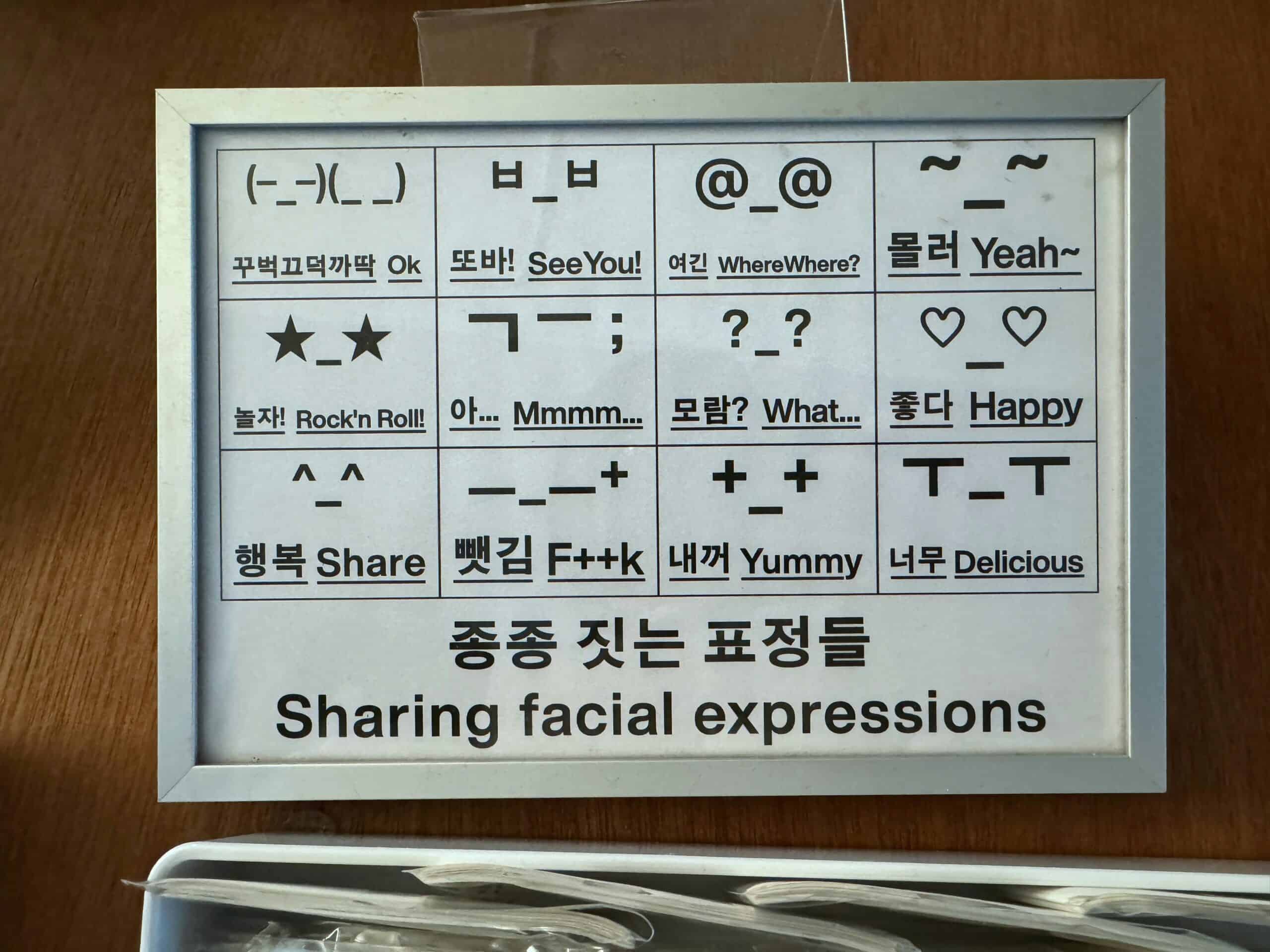
Korean internet slang is wild because it’s not just “words you don’t know yet,” it’s vibes, tone, chaos, and unspoken attitude all smashed into tiny syllables and keyboard smashes.
If you’ve ever stared at a comment like “와 미쳤다 ㅠㅠ 대박 ㅋㅋ” and understood… nothing, this one’s for you.
This guide breaks down the slang you’ll actually see on Twitter, TikTok, YouTube comments, and chat apps, plus what it really implies beyond the literal meaning.
Jump to:
- 💬 Why Korean Internet Slang Is a Whole Different Language
- 😂 Laughter & Reactions: ㅋㅋㅋ, ㅎㅎ, 헐, 대박, 미쳤다
- 😭 Drama & Feelings: ㅜㅜ, ㅠㅠ, 심쿵, 빡쳐, 현타
- 🧠 Gen Z Core: TMI, 갑분싸, 어이없네, 띵곡, 킹받네
- 🫶 Compliments, Insults & “Playful Bullying” Between Friends
- 📱 Chatroom Codes: Shortened Phrases, Numbers & Mixed English
- 🌶️ What Slang Implies vs What It Literally Means
- 🌍 Tips for Using Korean Slang Without Being Cringe
- ❓ Frequently Asked Questions
- 💬 Comments
💬 Why Korean Internet Slang Is a Whole Different Language
Just like English, Korean has:
- Normal, polite speech (textbook / “talking to your boss” level)
- Casual speech (friends, siblings, etc.)
- And then… online slang, which is its own monster
Online slang:
- Shortens words aggressively
- Mixes Korean + English (Konglish)
- Uses numbers, consonant-only typing, and weird sounds
- Relies heavily on tone and context
Literal translation often misses the point. For example:
- “미쳤다” literally = “It/they’re crazy” → but online, it often means “This is insanely good”
- “킹받네” looks intense → but is usually half-joking “I’m so annoyed but in a meme way”
So you can’t just plug it into a dictionary, you need the social meaning.
😂 Laughter & Reactions: ㅋㅋㅋ, ㅎㅎ, 헐, 대박, 미쳤다
These are the backbone of Korean comments.
ㅋㅋㅋ (kekeke)
- Sounds like: “kkuh kkuh kkuh”
- Meaning: laughter (like “lol”)
- More ㅋ = stronger laughter: “ㅋㅋㅋㅋㅋㅋㅋㅋ”
- One ㅋ (“ㅋ”) can feel a little dry or sarcastic depending on context, like a short “lol.”
ㅎㅎ (hehe)
- Softer, more gentle laugh
- Can feel friendly, shy, or polite
- “ㅎㅎㅎ” is like a warm chuckle, vs “ㅋㅋㅋ” big chaotic laughter.
You might even see combos like “ㅋㅋㅎ” or “ㅎㅎㅋ” when someone is amused but trying to hold it in.
헐 (heol)
- Rough meaning: “What the—?!” / “No way” / “Oh my god”
- Used when something is surprising, shocking, unbelievable
- Tone can range from genuinely stunned to “WOW what is this mess”
대박 (daebak)
- Literally: “jackpot”
- Online: “That’s awesome / amazing / insane (in a good way)”
- Can also be used for shock in general: positive or negative, depending on tone.
미쳤다 (michyeotda)
- Literally: “It’s crazy” / “They’re crazy”
- Very commonly means “This is insanely good” or “I’m obsessed.”
- Example vibe: perfect vocals, insane edit, or mind-blowing performance → “와 미쳤다…”
Context decides whether it’s praise or genuine concern, but online around idols/music, it’s usually praise.
😭 Drama & Feelings: ㅜㅜ, ㅠㅠ, 심쿵, 빡쳐, 현타
ㅜㅜ / ㅠㅠ
- These are crying eyes: ㅜ and ㅠ look like tears
- ㅠㅠ = louder cry than ㅜㅜ (more intense)
- Can be real sadness or “I’m emotionally overwhelmed but in a good way”
Ex:
- “너무 예뻐 ㅠㅠ” = “She’s so pretty I’m gonna cry.”
- “나 이 부분에서 ㅜㅜ” = “This part makes me cry/feel things.”
심쿵 (sim-kung)
- From “심장” (heart) + “쿵” (thump)
- Meaning: “My heart just went thump” / “heart-flutter moment”
- Used when someone is very cute, charming, or does something that makes your heart jump.
“심쿵했어” = “My heart just dropped (in a good, flustered way).”
빡쳐 (bbak-chyeo)
- Slangy, not polite
- Means: “I’m pissed / this is making me mad”
- Stronger than just “annoyed,” more like “I’m lowkey furious.”
Used with friends or online venting, not for formal situations.
현타 (hyeon-ta)
- Short for “현실 자각 타임” (reality check time)
- Used when the “fun illusion” breaks and reality hits hard
- Example: after binge-watching, gaming, spending too much money, or simping too much → “갑자기 현타 왔다” = “Suddenly reality hit me.”
It carries a vibe of “what am I even doing…”
🧠 Gen Z Core: TMI, 갑분싸, 어이없네, 띵곡, 킹받네
TMI
- Borrowed from English: “Too Much Information”
- In Korean fandom/online culture, it also just means “random personal detail / little update.”
- Ex: “오늘 TMI 알려줄까?” = “Want to hear today’s little TMI about me?”
Not really weird/oversharing, more like “fun fact about my day.”
갑분싸 (gap-boon-ssa)
- Short for “갑자기 분위기 싸해짐”
- Literally: “Suddenly the mood turned sour/awkward.”
- Used when someone says something that kills the vibe or makes everything awkward.
Ex: joking convo… then someone drops something too serious → 갑분싸.
어이없네 (eo-i-eop-ne)
- Literally: “(I) have no words / This is ridiculous.”
- Vibe: “I can’t even,” “You’ve got to be kidding me.”
- Can be playful or genuinely irritated, depending on tone and context.
띵곡 (tting-gok)
- Slang for “명곡” (masterpiece song).
- Meaning: “absolute banger / certified masterpiece track.”
- Used in music stan contexts: “이건 진짜 띵곡이다” = “This is such a banger.”
킹받네 (king-bat-ne)
- Meme form of “빡치네” (this is annoying / I’m pissed).
- Adding “킹” (king) exaggerates it in a half-joking, meme-y way.
- Vibe: “I’m SO annoyed right now 😭😂” but often playful.
You’ll see it when someone is mock-frustrated, like your bias being too attractive or a game being unfair.

🫶 Compliments, Insults & “Playful Bullying” Between Friends
Korean online culture includes a LOT of affectionate teasing. Some phrases can look harsh but are actually friendly if you know the relationship.
Compliments
- 귀엽다 (gwiyeopda) – “cute.”
- 잘생겼다 (jalsaenggyeotda) – “handsome.”
- 예쁘다 (yeppeuda) – “pretty.”
- 간지 난다 / 간지난다 (ganji nanda) – “so stylish / so cool.”
- 레전드다 (legend-da) – “this is legendary.”
You’ll also see:
- 뇌섹남 / 뇌섹녀 – literally “brain sexy man/woman,” meaning someone attractive because they’re smart.
Playful Bullying
Between close friends or when fans jokingly talk about idols, you might see:
- “미친 거 아니야?” – literally “Are you crazy?” but often = “Why are you like this (in a good way)??”
- “진짜 나빴다” – “You’re really so mean” → often used jokingly when someone teases you or your bias “attacks” you with visuals.
- “이 자식” / “이놈” – very context-dependent; between close people it’s playful like “this little punk,” but don’t use casually with strangers.
As a learner/foreigner, it’s safer to avoid these more aggressive-sounding ones unless you’re very sure of your relationship and tone. You can understand them without using them yet.
📱 Chatroom Codes: Shortened Phrases, Numbers & Mixed English
Korean typing online often chops words down to just consonants or abbreviations.
Common ones:
- ㅇㅋ = 오케이 (okay)
- ㅇㅇ = 응응 (“yeah / yep”)
- ㄴㄴ = 노노 (“no no / nope”)
- ㅊㅋ = 축하 (chuka) = “congrats”
- ㅊㅇ = 추천 (chucheon) = “recommendation” or “추천이요” in short form
You’ll also see Konglish:
- 셀카 (sel-ka) = selfie
- 컨셉 (concept) = concept/theme
- 텐션 (tension) = energy level / hype (“텐션 올라갔다” = they got hyped up)
- 리스펙 (respect) = respect
- 스포 (spo) = spoiler / sneak hint
Sometimes whole sentences get shortened:
- “머해?” = 뭐 해? = “What are you doing?”
- “밥 먹었어?” = “Have you eaten?” (classic casual check-in)
🌶️ What Slang Implies vs What It Literally Means
Tone in Korean online slang changes with:
- Repetition (more letters = stronger emotion)
- Switch from polite to casual
- Use of caps, emojis, or exclamation marks
Examples:
- “대박” = wow / amazing
- “대박…” with ellipsis could feel more stunned or skeptical
- “대박 ㅋㅋㅋㅋ” = “omg lmaooo that’s crazy”
“야” literally is “hey,” but:
- “야” to a close friend = normal
- “야!!” in caps to a stranger = rude/angry
- Fans saying “야 김○○” to an idol online is playful / dramatic fandom energy but you as a learner probably shouldn’t start there 😅
Rule of thumb: if you’re not sure, choose softer phrasing or keep it simple and polite.
🌍 Tips for Using Korean Slang Without Being Cringe
You absolutely can use slang as a non-native speaker, but a few tips will save you from awkward moments:
- Start with reactions.
Things like ㅋㅋㅋ, ㅎㅎ, ㅠㅠ, 헐, 대박, 미쳤다 are safe and common. - Match the space.
- Stan Twitter, casual DMs → slang okay.
- Language exchange with older people, work contacts, formal messages → stick to standard Korean.
- Copy the level, not the most extreme version.
If everyone is using “ㅋㅋㅋ” don’t jump straight to “킹받네 ㅅㅂ” (strong curse/slang) as your first attempt. - Use it more in reading than writing at first.
Understand a lot; write just a little. As your feel for tone develops, you can use more. - Watch native speakers your age group.
Focus on how idols, streamers, and vloggers talk, especially ones close to your age. They’re a good guide for “current” slang.
❓ Frequently Asked Questions
Yes, with awareness. Simple stuff like ㅋㅋㅋ, ㅠㅠ, 헐, 대박, 미쳤다 is totally fine. Just be careful with heavier swear words, harsh teasing, or very “in-group” memes until you really get the nuance.
Avoid strong insults and curse words. Don’t use aggressive “playful bullying” phrases on people you don’t know very well.
When in doubt, use the softer, more neutral version or add emojis so it feels friendly.
Follow Korean creators who add subtitles.
Save posts or comments with slang and look them up later.
Use them gradually, pick 3–5 phrases, get comfortable, then add more.



Comments
No Comments