
If you’ve ever watched a K-drama and thought, “Wait, I need to stand exactly where they confessed,” good news: a lot of those spots are ridiculously easy to visit by subway.
Seoul is dense, walkable, and stitched together by one of the most efficient metro systems in the world. That means you don’t need a tour bus or a private driver, just a T-money card, good shoes, and a list of locations.
This guide walks you through K-drama filming locations you can reach entirely by subway, plus simple itineraries and etiquette tips so you don’t stress (or annoy locals) along the way.
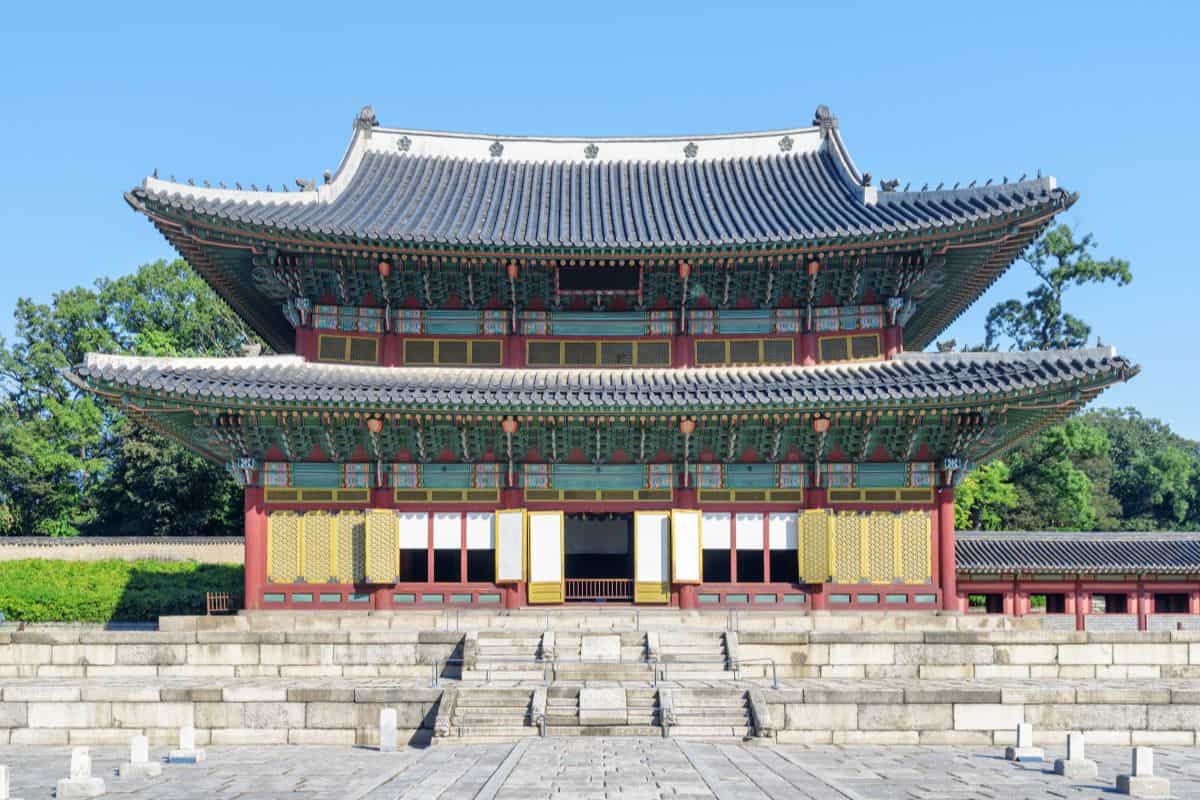
🎬 Why Seoul Is the Perfect DIY K-Drama Location Tour
A huge chunk of dramas film in and around the city—rom-coms, fantasy, time-slip sageuk, slice-of-life, you name it. Guides regularly highlight places like N Seoul Tower, Bukchon Hanok Village, Gyeongbokgung Palace and the Han River as repeat K-drama stars.
Why DIY by subway works so well:
- Most famous locations sit near subway stops or a short walk/bus hop away.
- You can chain 2–4 locations in the same area without wasting time in traffic.
- It’s budget-friendly: you spend your money on food and entry tickets, not cars.
🚇 How to Use the Seoul Subway for a K-Drama Day Out
A quick crash course so you don’t get lost before you even see your first filming spot:
- Get a T-money or compatible transit card at convenience stores or station kiosks. Tap in and out; it covers subway and most buses.
- Use Naver Map or Kakao Map instead of Google Maps for real-time directions (they’re what locals actually use).
- When you search a place, scroll to see the nearest station + exit number—that exit info matters a lot.
- Try to avoid hard rush hour (around 8–9 a.m. and 6–7:30 p.m.), especially if you’re doing long transfers.
A good structure is:
Morning: palace or village → Afternoon: cafés/streets → Evening: tower or Han River.
Everything below is built around that pattern.
🏙️ City Views & Romance: Towers, Bridges & Skyline Spots
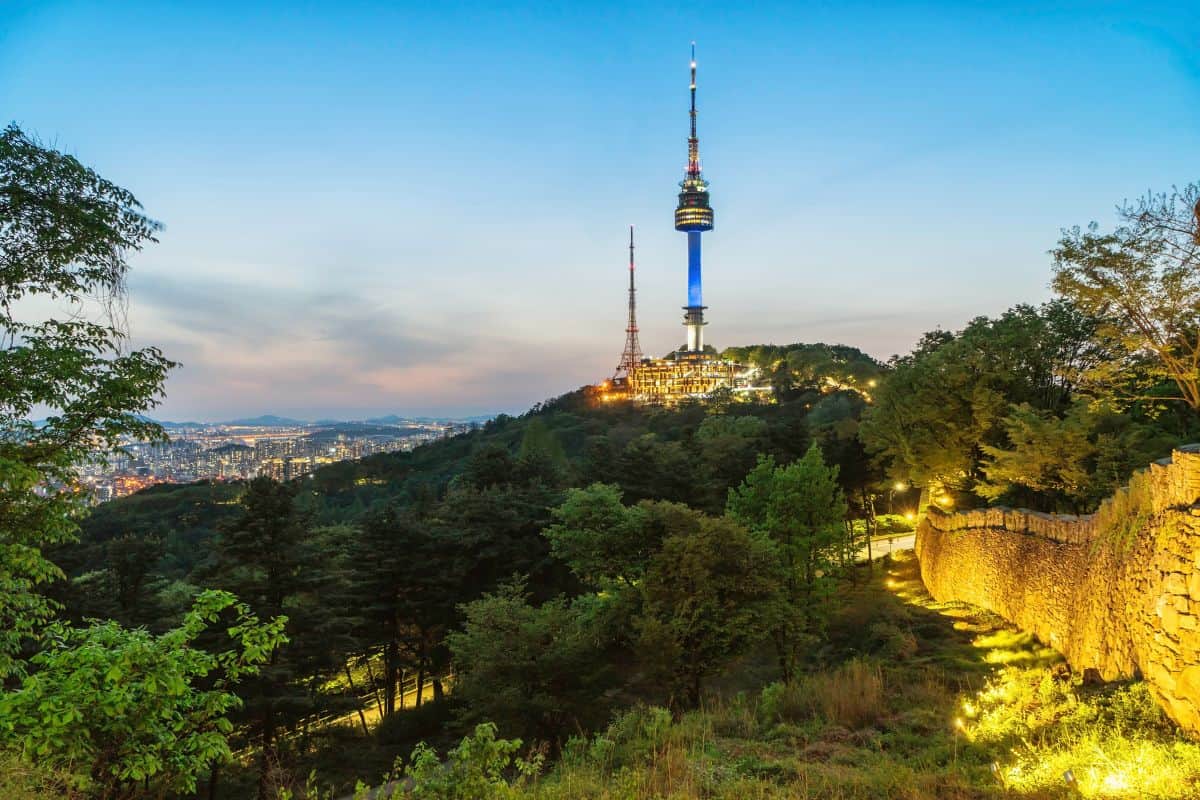
N Seoul Tower (Namsan Tower)
Featured endlessly in dramas like My Love From the Star and Boys Over Flowers, N Seoul Tower is basically the cliché romance spot: love locks, confession scenes, and sweeping night views.
How to get there by subway:
- Take Line 4 to Myeong-dong Station, Exit 3.
- Walk uphill to the Namsan Cable Car (you’ll see signs in English), ride up, then walk to the tower plaza.
- Alternatively, you can take a local Namsan shuttle bus from nearby stops if you want to skip the uphill walk.
Why go:
- Iconic skyline views, especially pretty at sunset or after dark.
- Love-lock fences if you’re into that trope.
- Feels instantly familiar if you’ve seen even a handful of romance dramas.
Lotte World Theme Park & Surroundings
While not every ride in Lotte World Theme Park appears onscreen, the park itself is a frequent backdrop for magical date scenes in multiple dramas.
How to get there:
- Take Line 2 or Line 8 to Jamsil Station, the park connects directly to the station via underground mall passages.
Why go:
- Indoor + outdoor theme park vibes straight out of a drama date episode.
- You can pair it with a walk around nearby Seokchon Lake for more romantic city views.
🏘️ Cute Streets & Café Districts Straight Out of a Drama
Bukchon Hanok Village
Bukchon is a traditional neighborhood of hundreds of hanok houses that’s been used in dramas like Goblin, The Heirs, and others.
Subway access:
- Line 3 → Anguk Station, usually Exit 2. From there it’s a short walk uphill into the alleys.
Things to know:
- This is a real residential area, not a theme park. As of 2025, the city limits general visitor hours (10 a.m.–5 p.m.) and asks tourists to keep noise down due to overtourism.
- Stay on signed walking routes, lower your voice, and avoid blocking doorways and windows for photos.
Ikseon-dong Hanok Streets
Ikseon-dong is like Bukchon’s younger, café-heavy cousin: hanok alleys filled with dessert cafés, tiny restaurants, and boutiques. It’s been used as a backdrop in multiple modern dramas thanks to its “old meets new” feeling.
Subway access:
- Lines 1 / 3 / 5 → Jongno 3-ga Station.
- Follow signs or map directions to the Ikseon-dong exit; the alleys start just a few minutes away on foot.
Why drama fans like it:
- Twinkly lights, narrow alleys, and cute shopfronts = perfect for “accidental shoulder bump” or “we got stuck in the rain” fantasy moments.
- Easy to combine with a palace or Insadong in the same day.
Hongdae & the Coffee Prince Area
The original Coffee Prince café was a real, remodeled café in the Hongdae area, and several scenes from the series were shot around streets in Mapo-gu.
Subway access:
- Hongik Univ Station on Line 2, AREX, or Gyeongui-Jungang Line.
What to do:
- Wander the side streets for indie cafés, mural walls, and nightlife.
- Even if the exact café has changed over the years, the overall vibe—artsy, young, slightly chaotic—matches what you see onscreen in many campus or youth dramas.
🌉 River Walks & Night Scenes Along the Han
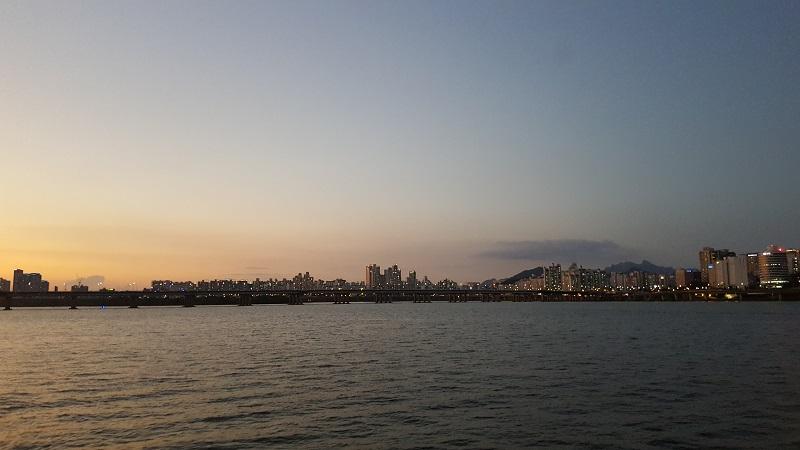
K-dramas love a late-night walk by the river: piggyback rides, convenience store snacks, deep life talks… The Han River parks are perfect for recreating that without spending anything but subway fare and maybe some ramyeon.
Han River Parks (Yeouido, Banpo, etc.)
Travel and K-drama guides consistently list Han River spots as must-visit locations for fans.
Two easy options by subway:
- Yeouido Hangang Park
- Line 5 → Yeouinaru Station (you basically come out right by the river).
- Great for bike rentals, riverside walks, and casual picnic scenes.
- Banpo Hangang Park & Banpo Bridge
- Line 3 / 7 / 9 → Express Bus Terminal Station, then walk or take a short bus/taxi to the park.
- At night, the bridge sometimes has a rainbow fountain show, which feels very “K-drama date night.”
Pack snacks from a convenience store, sit by the water, and it’ll feel like you’ve accidentally wandered into an evening episode.
🏛️ Palaces, Old Seoul & Historical Drama Backdrops
Gyeongbokgung Palace
This main royal palace shows up in countless historical and time-slip dramas, guides highlight it specifically for its K-drama connections.
Subway access:
- Line 3 → Gyeongbokgung Station (Exit 5 brings you close to the main gate), or
- Line 5 → Gwanghwamun Station and walk north.
Why go as a drama fan:
- You can wander the large courtyards and halls that often appear in royal or guard scenes.
- Renting hanbok nearby gets you free palace entry and gives you that full K-drama historical lead energy.
Traditional Streets Around Changdeokgung & Wonseo-dong
The small alleys of Wonseo-dong, just behind Changdeokgung’s stone walls, are known for their traditional architecture and calm atmosphere, and they’ve been used as filming spots thanks to that “old Seoul” feel.
Subway access:
- Same general area as Bukchon and Changdeokgung: Line 3 → Anguk Station.
Walk slowly, respect the residential feel, and you’ll see why directors love this backdrop for quieter, reflective scenes.
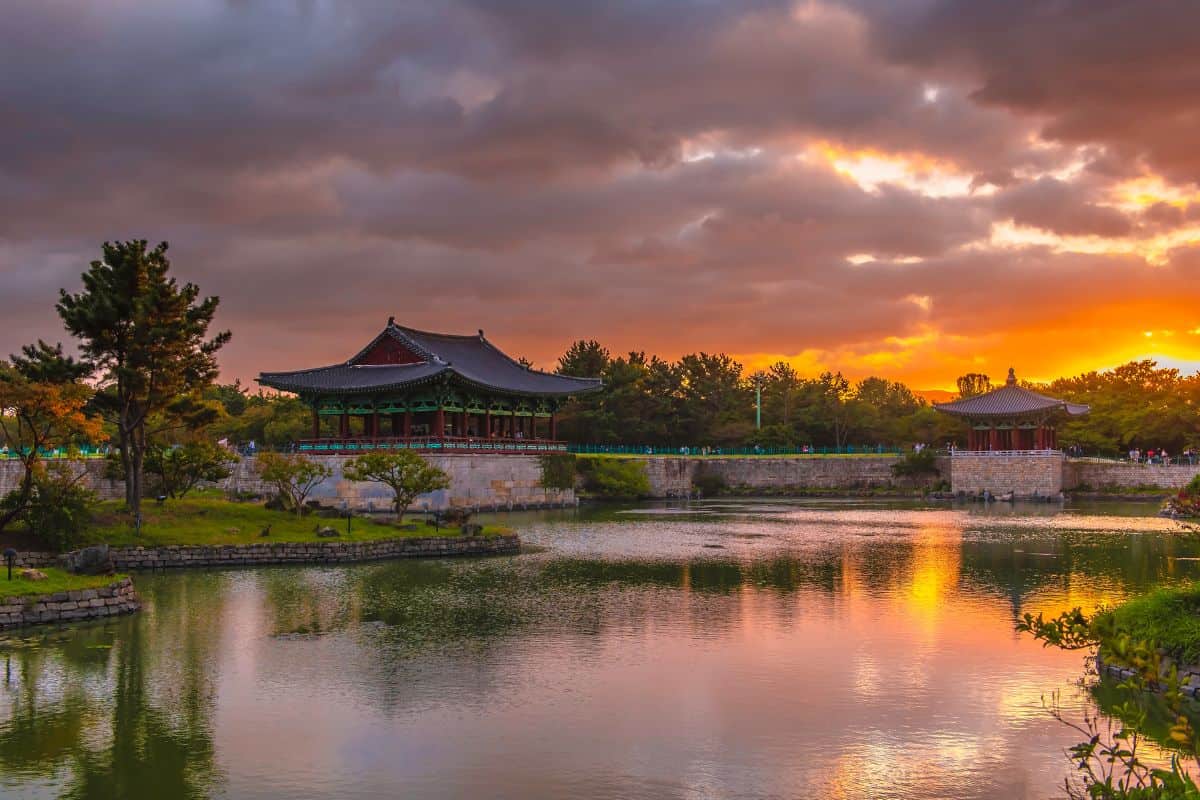
📸 How to Plan a 1-Day (or 2-Day) K-Drama Subway Itinerary
You don’t have to hit everything; here are sample routes you can tweak.
1-Day K-Drama Hit List (Central Seoul)
Morning
- Subway to Gyeongbokgung Station (Line 3) → explore Gyeongbokgung Palace.
- Walk or short subway hop to Bukchon Hanok Village via Anguk Station.
Afternoon
- Head to Ikseon-dong (Jongno 3-ga Station) for lunch and café hopping.
- Optional detour through Insadong for more traditional-meets-modern vibes.
Evening
- Ride Line 4 to Myeong-dong Station, take the cable car up to N Seoul Tower for classic night views and love-lock moments.
All by subway, with walking in between.
2-Day K-Drama + River Combo
Day 1: Old Seoul & Hanok Streets
- Morning at Gyeongbokgung.
- Lunch + afternoon in Bukchon and/or Ikseon-dong.
- Tea in a traditional or themed café.
Day 2: Youthful Streets & Han River
- Start in Hongdae (Hongik Univ Station) for youth-drama energy and street photos.
- Late afternoon/evening move to Yeouinaru Station (Line 5) for a Han River park picnic or bike ride.
- If you still have energy, end the night at Banpo Hangang Park for the bridge lights.
💡 Practical Tips: Crowds, Etiquette & Expectations vs Reality
- Check opening hours for palaces and towers; many attractions close one day a week or have last entry times earlier than you think.
- Bukchon & residential hanok areas have noise and visiting-hour rules because residents were overwhelmed by tourism. Stay quiet, don’t ring doorbells or peek inside windows, and avoid super-early or very late visits.
- Some “locations” you see online are actually closed sets or studios, not public spaces—don’t stress if you can’t match every exact angle from your favorite show.
- Weekdays and earlier hours are almost always less crowded than weekend afternoons.
Think of it less as “recreating scenes perfectly” and more as walking through the same kind of spaces your favorite characters move in.
❓ Frequently Asked Questions
Not really. Subway signage, ticket machines, and most big attractions have English support. For smaller cafés or alleys, a combination of map apps, simple English, and pointing at menus works fine.
Fan blogs, YouTube, and K-drama travel sites often share exact café names, bridge corners, or street views. If you have a specific scene in mind, search the drama title + “filming location” and cross-check it on a map before you go.
Generally yes. Central areas like palace districts, Hongdae, and Han River parks are full of other people, couples, and families. Just follow normal city safety: keep valuables secure, avoid empty parks very late at night, and stick to well-lit routes.

Comments
No Comments